Morocco 8-Day Itinerary: Marrakech, the Sahara and Fes
Eight days across the country, including three on the road to the dunes and one night sleeping in them.
5 Places to Visit in Morocco, a Line Each
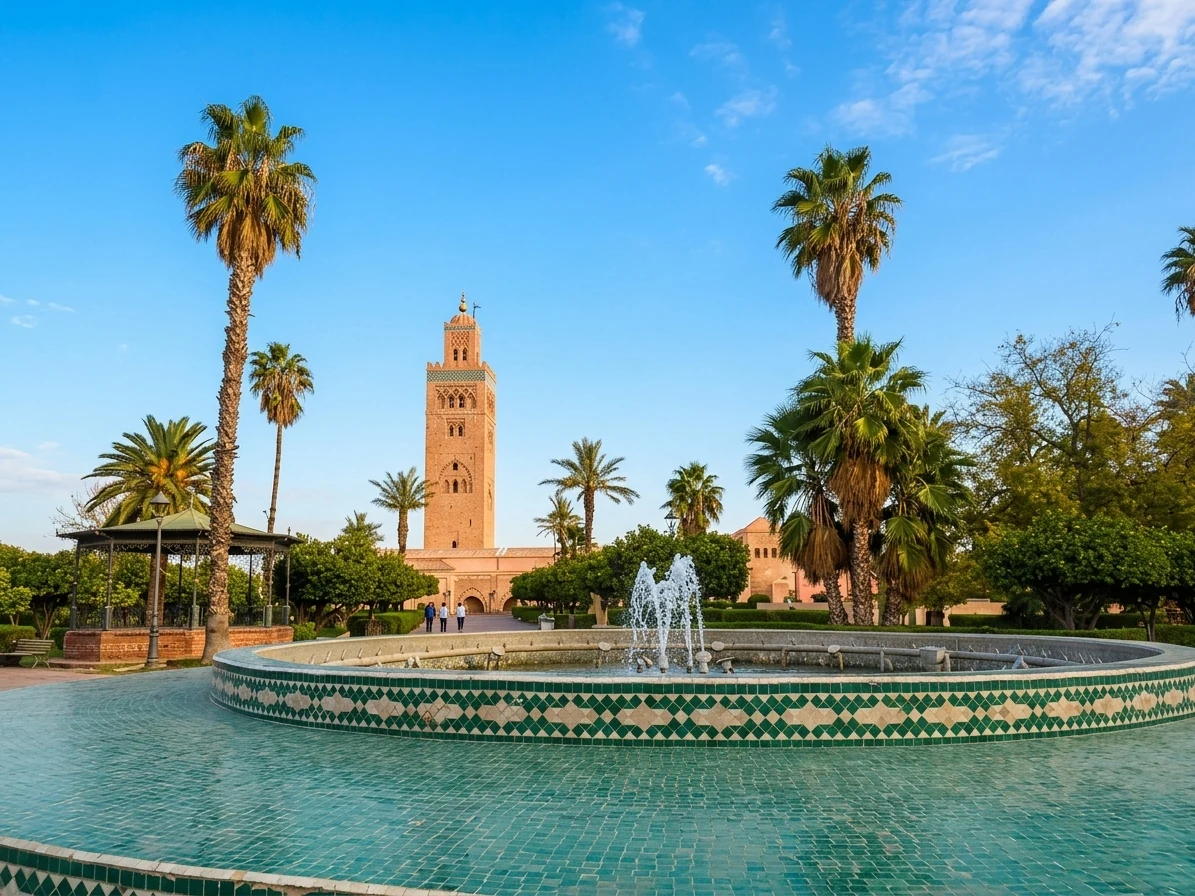
Marrakech — where the trip starts and ends: the Jemaa el-Fnaa after dark, the quarter around Ben Youssef, and a full day back at the end to do it all again slowly.
Aït Benhaddou — the earth-walled ksar on the far side of the High Atlas, our midday stop on the first day of the desert crossing.
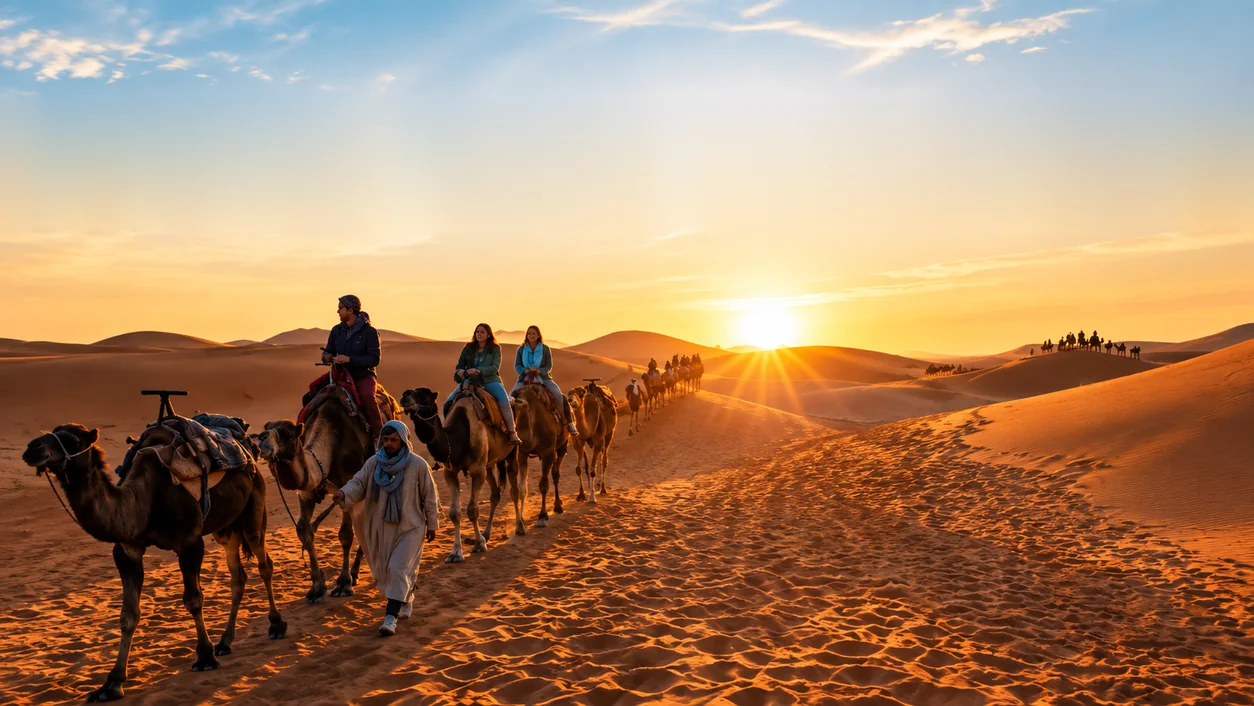
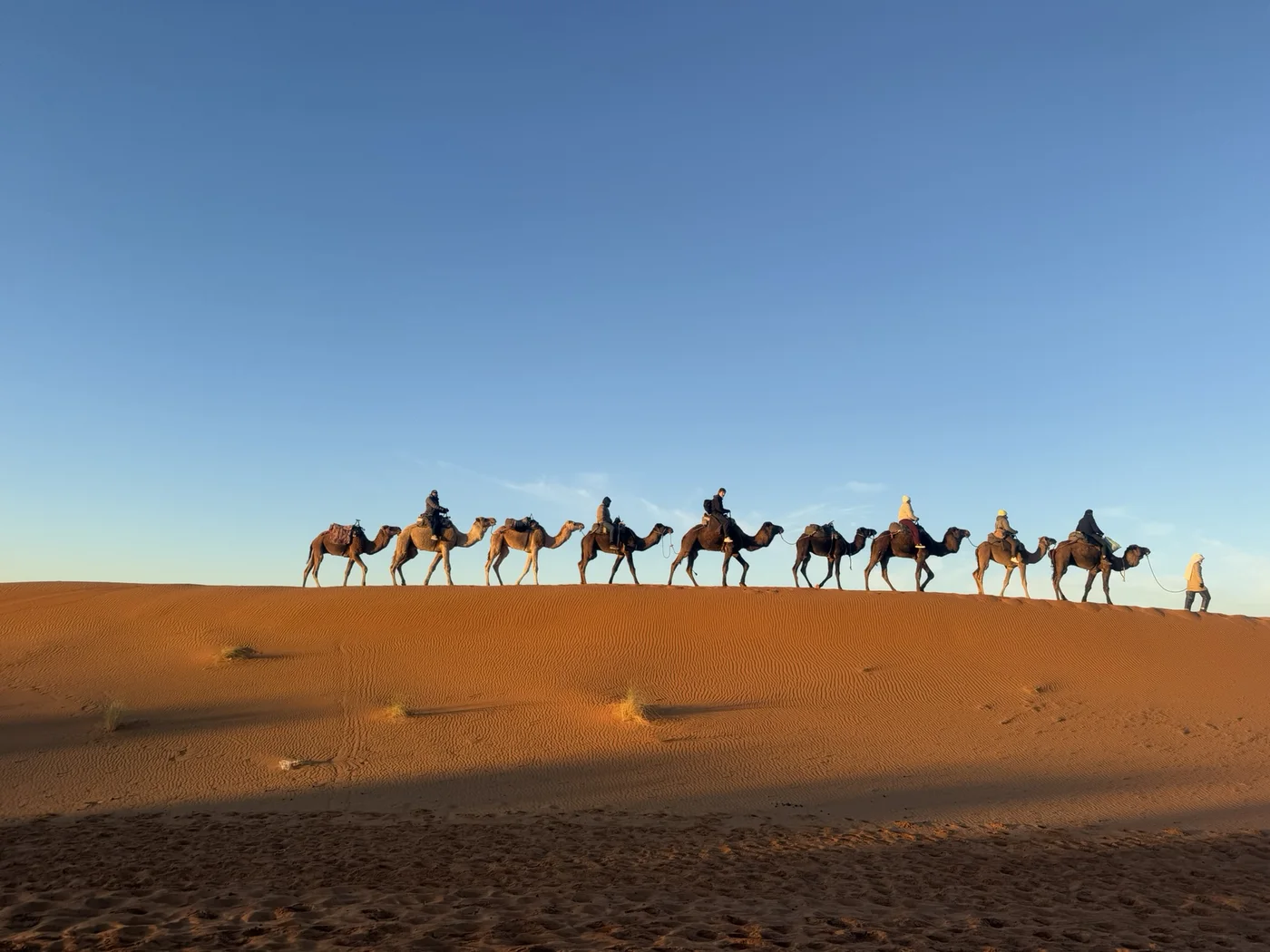
Erg Chebbi — a camel trek into the dunes at sunset, a night in a desert camp, and sunrise over the sand before the long drive north.
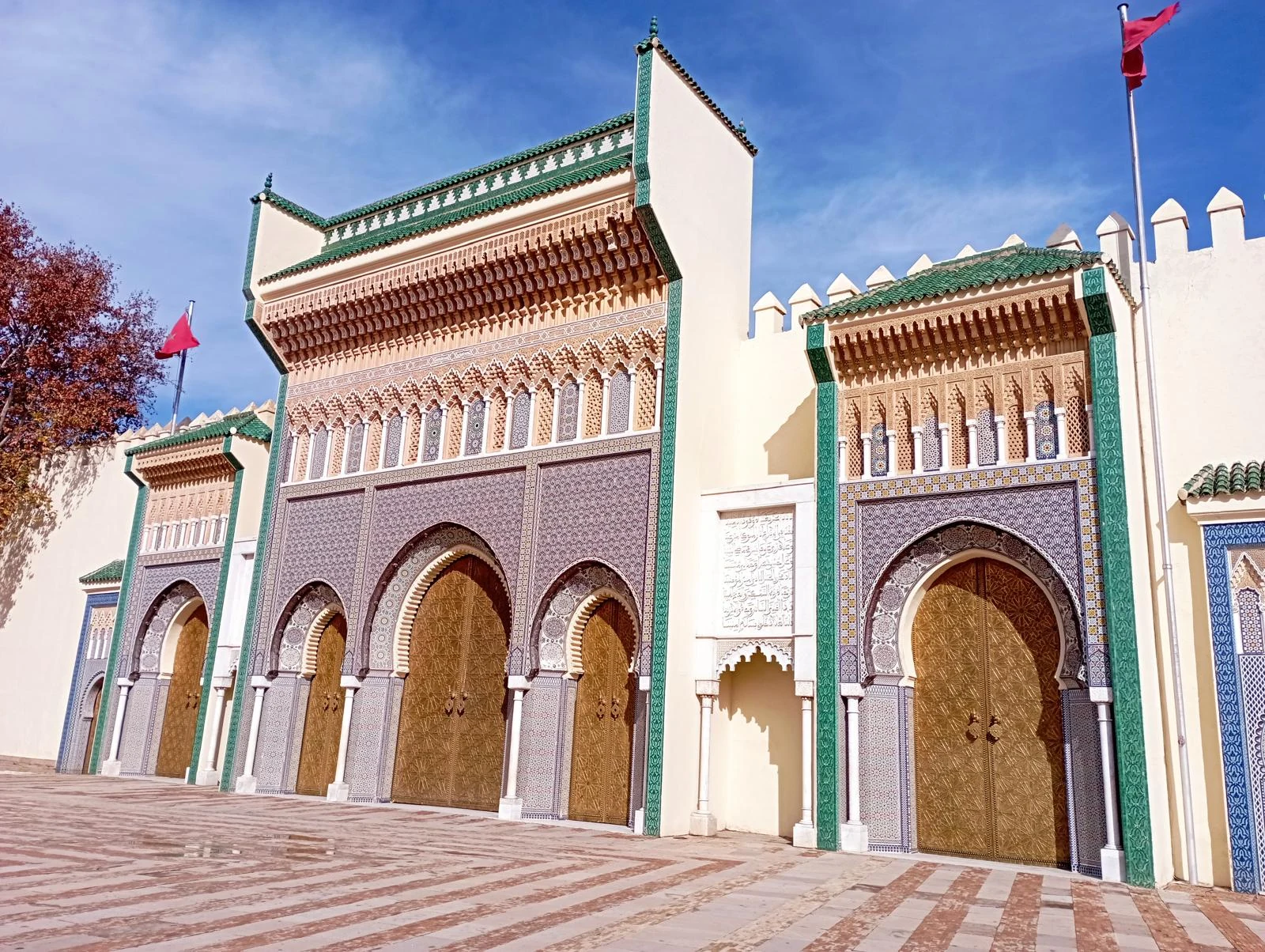
Fes — the largest car-free urban area in the world, nine thousand lanes of it, and where we saw in the New Year.
Chefchaouen — the blue town, a long day out of Fes; three hours was enough to see it, not to sit in it.
The route in short
- One night Marrakech, two on the road to the Sahara, two in Fes, two in Marrakech again. Eight days, seven nights, 27 December to 3 January.
- The desert crossing is one-way. The standard three-day tour starts in Marrakech and ends in Fes — it is not a round trip, and that is what makes this route work.
- Chefchaouen is a long day out of Fes, not a base. We had about three hours in the town and it was enough to see it, not to sit in it.
- Fly Fes to Marrakech at the end. One hour in the air against a full day on the road, and it cost €16.50 a head. This is the single best decision on the whole itinerary.
- Late December is warm in the cities and cold in the dunes — and it is not quiet. Around 20 °C in the sun is why we picked Morocco over anywhere in Europe that week, and it is why a lot of other people pick it too. The monuments are busy over New Year. Book the ones that sell out.
Eight days, two people, €1,722 all in — food included. Every bed, flight, tour and meal on this page is a real number off a real receipt, and the full breakdown is further down.
Day by day
8-Day Morocco Itinerary, Day by Day
Every time below is read off the photographs, so this is the trip as it happened rather than the trip as it was planned.
| Day | Base | What we did | Getting around |
|---|---|---|---|
| 1 | Marrakech | Arrived, walked the medina, Jemaa el-Fna after dark | Flight · airport transfer · on foot |
| 2 | On the road | Tizi n'Tichka pass over the High Atlas, Aït Benhaddou at midday | Tour minibus |
| 3 | Erg Chebbi | Camel trek into the dunes at sunset, night in the desert camp | Minibus · camel |
| 4 | Dunes → Fes | Sunrise in the dunes at 08:15, then the long drive north to Fes | Camel · minibus |
| 5 | Chefchaouen | Day trip to the blue city, back in Fes for New Year's Eve | Road |
| 6 | Fes | The medina, the view over it from the south, 21:30 flight back to Marrakech | On foot · flight |
| 7 | Marrakech | A full day back where we started | On foot |
| 8 | Home | Flight out of Marrakech | Flight |
Two nights of this trip were spent moving — one in a hotel on the desert road, one in a camp in the dunes. That is the trade the three-day crossing asks for, and it is why you only unpack twice.
The guides
Four Guides, One Trip
Days 1 & 7 · 2-day guide
Marrakech
The square after dark, Bahia Palace and the Jardin Secret — and the two tickets that sell out before you arrive.
Days 2–4 · the crossing
Marrakech to Fes by desert
What the three-day tour includes, what it quietly doesn't, and what the dunes are like at 08:15 in December.
Days 4–6 · 2-day guide
Fes
The free viewpoint over the whole medina, how the tanneries actually work, and New Year in a riad.
Day 5 · day trip
Chefchaouen
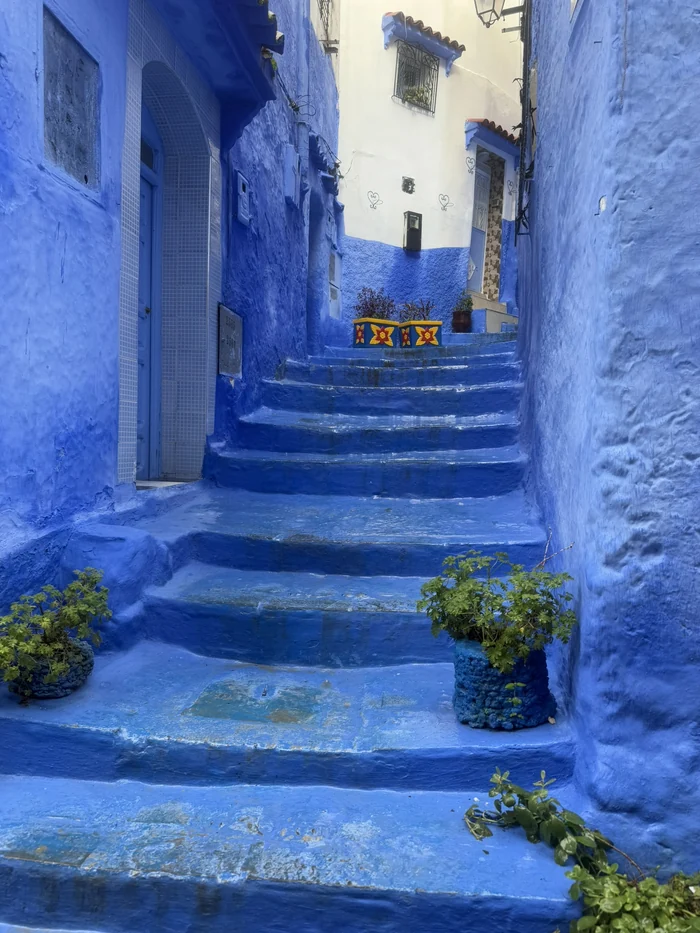
Three hours in the blue city from Fes, the Kasbah ticket, and the truth about the photogenic corners.
Money
How Much Does 8 Days in Morocco Cost?
Late December is the most expensive week of the Moroccan winter, and these are the prices we actually paid in it, booked between seven and ten weeks out. Everything below is for two people.
| City | Property | Dates | Nights | Total | Per night |
|---|---|---|---|---|---|
| Marrakech | Riad Dar Tamlil (affiliate link) | 27–28 Dec 2025 | 1 | €77.25 | €77.25 |
| Fes | Riad Tayba (affiliate link) | 30 Dec 2025 – 1 Jan 2026 | 2 | €116.00 | €58.00 |
| Marrakech | Riad Zagouda (affiliate link) | 1–3 Jan 2026 | 2 | €150.48 | €75.24 |
| Five booked nights, two people | 5 | €343.73 | €68.75 |
The Fes number is the one to look at. €58 a night for two inside the medina, over New Year, is roughly a third of what the same date costs in Marrakech and a quarter of what it costs in southern Spain. If New Year's Eve is in your trip, put it in Fes.
| Item | When | Total | Per person |
|---|---|---|---|
| Flights, return, no checked bags | 27 Dec – 3 Jan | €440.00 | €220.00 |
| Marrakech–Fes 3-day desert crossing · GetYourGuide · includes 2 nights, 2 dinners, 2 breakfasts, both camel treks | 28–30 Dec | €395.86 | €197.93 |
| Chefchaouen day trip from Fes · small group, 8–17 people | 31 Dec, 08:00 | €42.00 | €21.00 |
| Fes medina walking tour · 3 hours | 1 Jan | €27.12 | €13.56 |
| Fes–Marrakech internal flight · 21:30 | 1 Jan | €33.00 | €16.50 |
| Flights and everything booked in advance | €937.98 | €468.99 |
| Item | Total | Note |
|---|---|---|
| Accommodation, 5 booked nights | €343.73 | Two further nights were inside the desert tour |
| Tours and activities | €464.98 | Desert crossing, Chefchaouen, Fes medina |
| Flights | €473.00 | €440 return for two, cabin bags only · €33 Fes–Marrakech |
| Food and drink, eight days | €240.00 | €30 a day for two, every meal out · two dinners and two breakfasts were inside the desert tour |
| New Year's Eve dinner, Riad Tayba | €200.00 | €100 a head, on top of the room — see below |
| Eight days, two people | €1,721.71 | ≈ €861 each, ≈ €215 a day for two |
That is the real number, not an estimate. The only things outside it are monument tickets (Marrakech and Fes are a few euros each — see the city guides), taxis, tips and anything you buy in the souk. Take the New Year's Eve dinner out and the same eight days come to €1,522, or about €190 a day for two.
The one line that breaks the budget
The New Year's Eve dinner at the riad in Fes cost €100 a head — €200 for two, paid on top of the room. The room, for comparison, was €58 a night. One dinner cost more than the entire two-night stay.
We are putting it in its own section rather than burying it in a table because it is the single thing we would most want to have known in advance. Riads in Fes price 31 December as an event, not as a meal, and the room rate you are quoted tells you nothing about it. The evening itself was worth it — see the Fes guide — but it should be a decision, not a surprise at checkout. Ask for the New Year's Eve dinner price before you commit to the dates.
It is also the reason the food line and the dinner line are listed separately above. Ordinary eating in Morocco cost us €30 a day for two. This one evening cost €200 — more than six normal days of eating, in a single sitting.
On that internal flight. It is booked separately from the return, it leaves Fes at 21:30, and it cost €33 for two. The alternative is roughly nine hours on the road or the overnight train, on the last day of a trip. Thirty-three euros is not a decision, it is a formality — book it the moment the desert crossing is confirmed, because there are only a couple of flights a day on that route and the holiday week fills them.
How that compares
Our ten days in Andalusia a year earlier came to roughly €2,166 for two, but that figure carries car hire and about €434 of monument tickets and excludes food, while the Morocco number above includes every meal — so do not put the two totals side by side and draw a conclusion.
Compare the lines that match instead. The bed: €69 a night for two in Morocco against €126 in Spain, in the same week of the same holiday. The food: €30 a day for two in Morocco, which in southern Spain over New Year would not cover one sit-down lunch. Those two lines are most of the difference between the two trips, and both of them are the kind of difference that compounds over a week.
Where to sleep
Stay in a Riad. Not in a Hotel.
This is the single recommendation we would make hardest to anyone going to Morocco for the first time. A riad is a traditional house built around an inner courtyard, usually two or three storeys, usually a handful of rooms, almost always behind an unremarkable door down a lane you would not otherwise walk down. All three places we stayed were riads — Dar Tamlil and Zagouda in Marrakech, Tayba in Fes — and we would not swap any of them for a hotel on a main road. In both cities we slept inside the medina itself, not in the new town, and that is the half of the recommendation people skip: a riad in the Ville Nouvelle is just a hotel with a courtyard. Inside the walls you step out of the door into the thing you came for, you walk home at night through lanes that are still busy, and the first call to prayer arrives over the roof rather than across a dual carriageway.
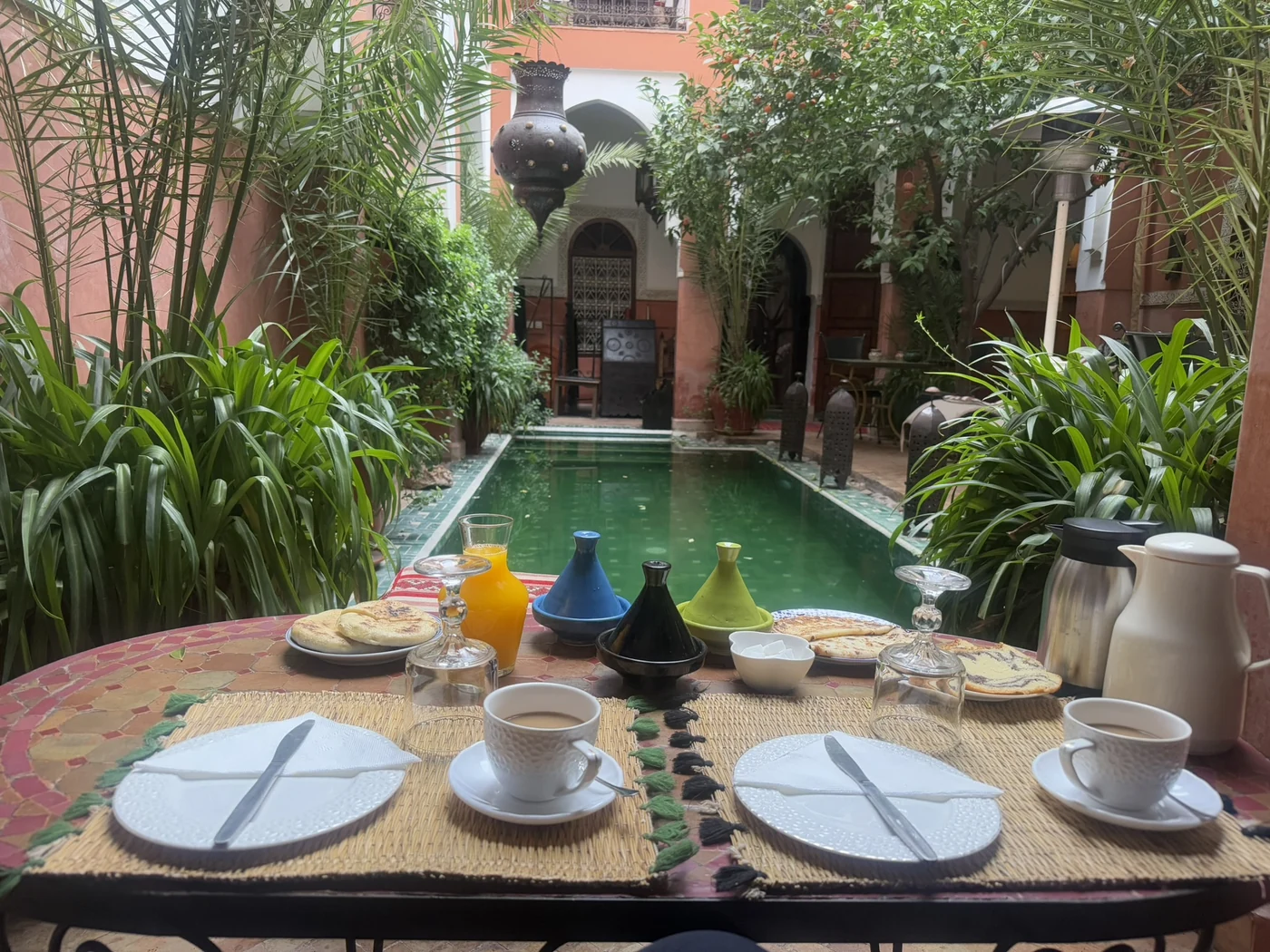
Set your expectations correctly, though: a riad is not a luxury hotel, and most are not trying to be. Rooms can be small. Plumbing is old. There is no lift, the stairs are steep and tiled, and in winter the courtyard that makes the place beautiful is also the reason the hallway is cold. What you get instead is a building that belongs to the city it is in, breakfast served in the courtyard or on the roof, and someone on the desk who actually knows which lane you want. The courtyard above is the whole argument in one picture: four walls of noise and dust outside, and inside, palms, an orange tree, a pool and a table laid for two. That trade is worth making.
And it is cheap. Our five booked nights came to €343.73 for two — an average of €69 a night, over Christmas and New Year, inside the old cities. The Fes riad was €58 a night for two on New Year's Eve. See the full breakdown above.
Two practical notes. Riads are inside the medina, which means a taxi cannot drop you at the door — ask yours to arrange a porter or a meeting point for the first arrival, and do it in advance, because finding the right lane with luggage after dark is nobody's idea of a good start. And a courtyard house in late December is cold in the circulation spaces even when the room is warm, so pack something to wear indoors.
Eating
What We Actually Spent on Food: €30 a Day, for Two
Thirty euros a day covered both of us, every meal, every day. We never once cooked or bought supermarket food — that figure is eating out, start to finish, and it is not a cheap day picked out of expensive ones. Morocco is one of the few places left where a good meal costs less than the taxi to it.
Two things make that possible, and the first is the one people miss. Eating out does not have to mean a restaurant. We ate a lot of our meals at street stalls inside the medinas — grills, sandwiches, soup, pastries, fresh juice — and it was extremely cheap and genuinely very good. Not a compromise, not a story to tell afterwards: some of the best food of the trip. Pick a stall with a queue of locals and a high turnover, watch it being cooked in front of you, and you will eat better for two euros than you will for twenty in the wrong courtyard.
The second is the choice you make when you do sit down, and it is worth understanding before you book a table: we ate in local places rather than in the ones designed to look charming to visitors. The tell is alcohol. Restaurants licensed to serve alcohol in Morocco are dramatically more expensive than ones that are not — the licence itself costs an enormous amount, and that cost is in every dish on the menu, not just the wine list. A place with no licence has nothing to recover, so the same tagine costs a fraction.
So the practical advice is simple. Look for the atmosphere rather than the comfort. Rooms full of Moroccans eating; handwritten or wall-mounted menus; a kitchen you can see. There are plenty of them, in every price bracket, and they are not hiding. If you want wine with dinner you will pay several times over for the privilege, and that is a decision to make deliberately rather than by accident.
Alcohol is legal for visitors in licensed restaurants, bars and hotels, and in the alcohol counters of some supermarket branches. Drinking it in the street is illegal. Shops inside the medina do not sell it, and which supermarket branches stock it varies branch by branch.
Before you go
Morocco Practicalities for EU Travellers (2026)
You do not need a visa, but you do need a passport
Bulgarian citizens may enter Morocco for tourism without a visa, for two stays of ninety days each within a one-year period — note that unusual wording; it is not the rolling 90-in-180 rule you may be used to. A national ID card is not accepted; you need the passport. The Bulgarian Ministry of Foreign Affairs asks for three to six months' validity beyond entry, the US State Department says six. Travel on six months and you satisfy both.
Sources: Bulgarian MFA country page (updated 16 October 2025) and the US State Department (30 July 2026).
The dirham is a closed currency — you cannot stock up before you fly
Morocco's foreign exchange regulator states plainly that importing and exporting dirhams is prohibited, with a traveller's allowance of up to 2,000 MAD (about €185) in banknotes either way. So you change money on arrival, not at home. Keep your exchange receipts — you need them to change leftover dirhams back on the way out. Bringing in foreign currency worth more than 15,000 MAD has to be declared.
Cards work in hotels and larger restaurants, often with a fee. Everything else — the medina, taxis, the tannery terrace, the man with the camels — is cash.
Sources: Office des Changes and the US State Department.
Alcohol: legal for you, but only in the right places
Alcohol is sold in licensed venues and in the alcohol counters of some supermarket branches. Drinking it in the street, or anywhere other than a licensed restaurant or bar, is illegal and can lead to arrest. Which supermarket branches stock it is branch-by-branch, not chain-wide, so a list copied from an old article will send you to the wrong door. Shops inside the medina generally do not sell it at all.
Source: UK FCDO travel advice (updated 19 August 2026).
Ask before you photograph anyone
There is no Moroccan law about photographing people in the street, and no local by-law in Chefchaouen whatever you may read. What there is, is the ordinary courtesy that official advice spells out anyway: ask first, especially with children. Photographing palaces, government buildings and anything military is a different matter and genuinely prohibited.
Sources: UK FCDO and the US State Department.
Mobile data: EU roaming does not cover Morocco
Morocco is outside the EU, so a European SIM card gets no free roaming there; check your operator's prices before you go. We had mobile data for the whole trip, but we no longer remember which provider we used. The simplest option is an eSIM you install before you fly, for example from Yesim (affiliate link), so you are online as soon as you land.
Honest bit
What We'd Change
The desert tour ate the only Marrakech day we had
We had planned a full city day — Bahia Palace, Ben Youssef, Majorelle, the Koutoubia — and the three-day crossing took it. A multi-day tour blocks out more than its own length: it takes the afternoon before and the morning after as well. Budget the shoulders, or accept that the city is an evening.
Chefchaouen deserved a night, not an afternoon
Under three hours on the ground against a full day in the car, and in the middle of the day at that. The blue city is worth being in at dawn and after dark, and a day trip from Fes gives you neither.
Flying Fes to Marrakech — that part we got right
An hour in the air against roughly seven on the road, on a cheap internal flight. We landed late, got to the hotel late, and still went out to the square, which runs well past midnight. On a route that crosses the country one way, the flight home is the difference between eight days and nine.
We used transfers at both ends, in Fes and in Marrakech, booked separately and not through the companies linked here. If you want yours booked in advance, GetTransfer (affiliate link) lets drivers quote a fixed price for your route, Fes included, and for Marrakech airport there is also Intui.travel (affiliate link).
Quick answers
Morocco Itinerary FAQ
How many days do you need for Morocco?
Eight days covers Marrakech, the Sahara, Fes and Chefchaouen, which is what this route does, but two of those days are spent crossing the country. Six days works if you drop Chefchaouen. Ten would let you slow down in Marrakech instead of seeing it twice in passing.
Is the three-day desert tour from Marrakech to Fes worth it?
It is the only sensible way to do the dunes without backtracking. The tour drives you over the High Atlas, stops at Aït Benhaddou, puts you on a camel into Erg Chebbi for sunset and again for sunrise, and delivers you to Fes on the third evening. The driving is long — two full days of it — and the sunrise is the part everyone remembers.
Should you fly or drive between Fes and Marrakech?
Fly. It is about an hour in the air against roughly seven on the road, and the internal flights are cheap. We took an evening flight, reached the hotel late, and still went out to Jemaa el-Fna — the square runs well past midnight.
Do you need a visa for Morocco with an EU passport?
Bulgarian citizens do not need a visa for tourism, and may stay for two periods of ninety days within any one year. You must travel on a passport, not an ID card, and six months' validity keeps every authority happy.
Can you bring dirhams into Morocco?
Only up to 2,000 dirham in banknotes. The dirham is a closed currency and its import and export are otherwise prohibited, so you change money after you land, and you keep the receipts so you can change what is left back before you fly home.
Is late December a good time to visit Morocco?
Yes, and that is exactly why we went: around 20 °C in the sun in Marrakech while most of Europe and North America is near freezing, plus sunrise at a civilised hour just after eight. Two honest catches. It is not a quiet season — plenty of other people have worked out the same thing, and the headline monuments are busy over Christmas and New Year, so the ones with timed tickets have to be booked ahead. And it is not guaranteed sunshine: it rained on us for most of our Marrakech days. The desert at night is genuinely cold, and the High Atlas passes can close in snow.
A little more adventure in your inbox.
The newsletter is being set up. Until it opens, write to us and we'll add you to the first send — and we'll answer any question about a trip while we're at it.
No spam, one click to unsubscribe once it starts. We never share your address — see the privacy policy.