Matera in 24 Hours: the Sassi by Evening and Morning
A city cut downward into a ravine, lived in since prehistory — seen in the hour it lights up, and again over breakfast.
VisitedYes — in person
Trip date20–21 September 2026
We paid€140.12 for the night
Sections covered6
Matera Is Not in Puglia, and You Should Go Anyway
Matera is over the regional border, in Basilicata — so strictly it does not belong in a Puglia itinerary at all. It belongs in this one because it is about an hour from the trulli country, because people have lived in it continuously for thousands of years, since the Palaeolithic (UNESCO), and because leaving it out to keep a regional boundary tidy would be absurd.
We drove in from Zoosafari at Fasano and were underground by quarter past six. We slept in the Sassi — €140.12 for the night — and that is the decision that shapes everything else here, because the town you see at eight in the evening and the town you see at nine the next morning are not the same town.
The Sassi are two districts of houses cut into and built out of a limestone ravine, inhabited since the Palaeolithic, emptied by the state in the 1950s to improve sanitation, and repopulated from the 1980s. You are walking through all of that at once.
WhereBasilicata, over the border from Puglia. About an hour from Alberobello.
We paid€140.12 for one night, 20–21 September 2026.
AllowAn evening and a morning. We had exactly that and it was tight but right.
SleepIn the Sassi, not the modern town above.
We stayed hereOne night, 20–21 September 2026.
Palombaro Lungo: A Cathedral of Water Under the Main Square
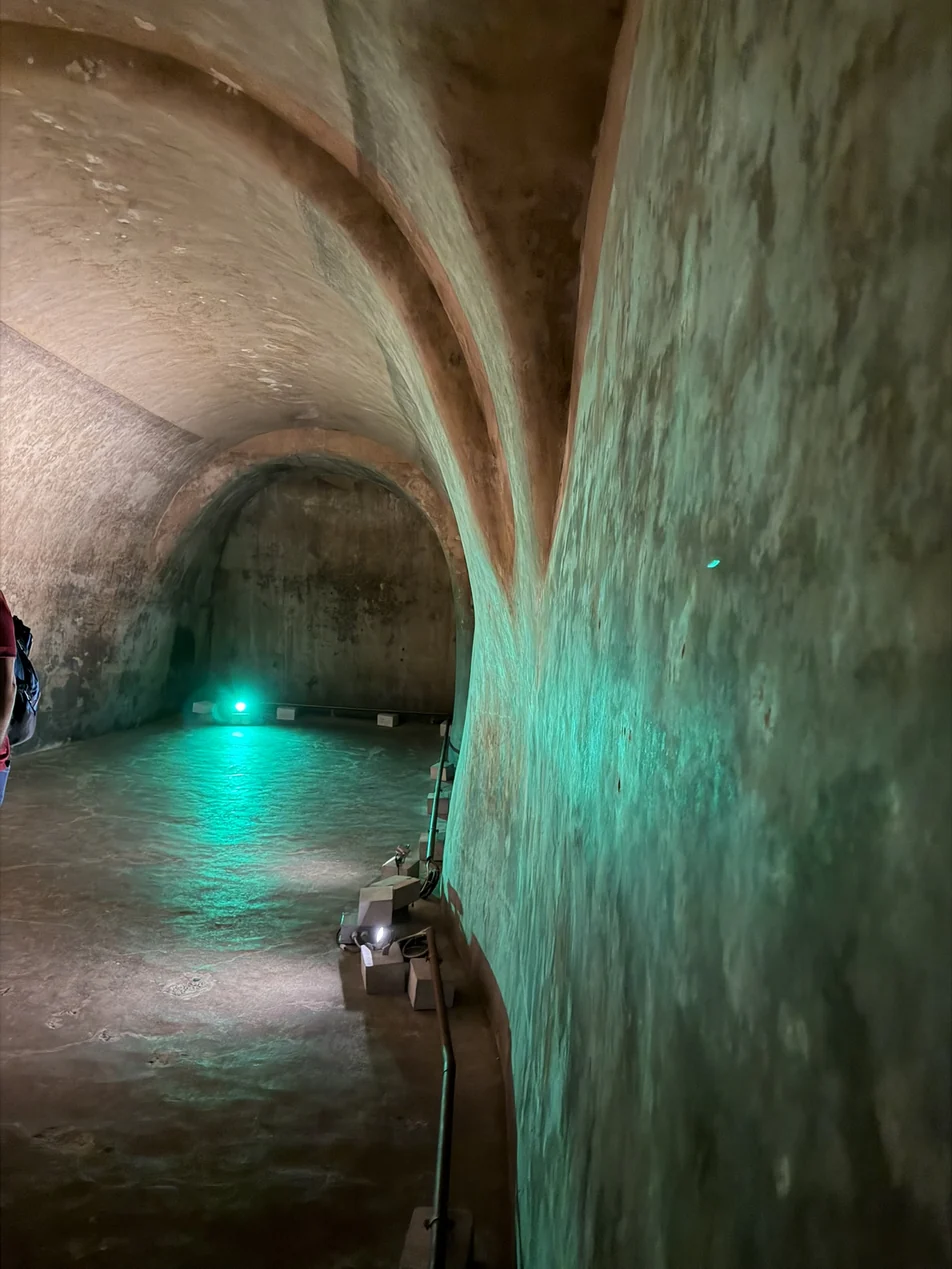
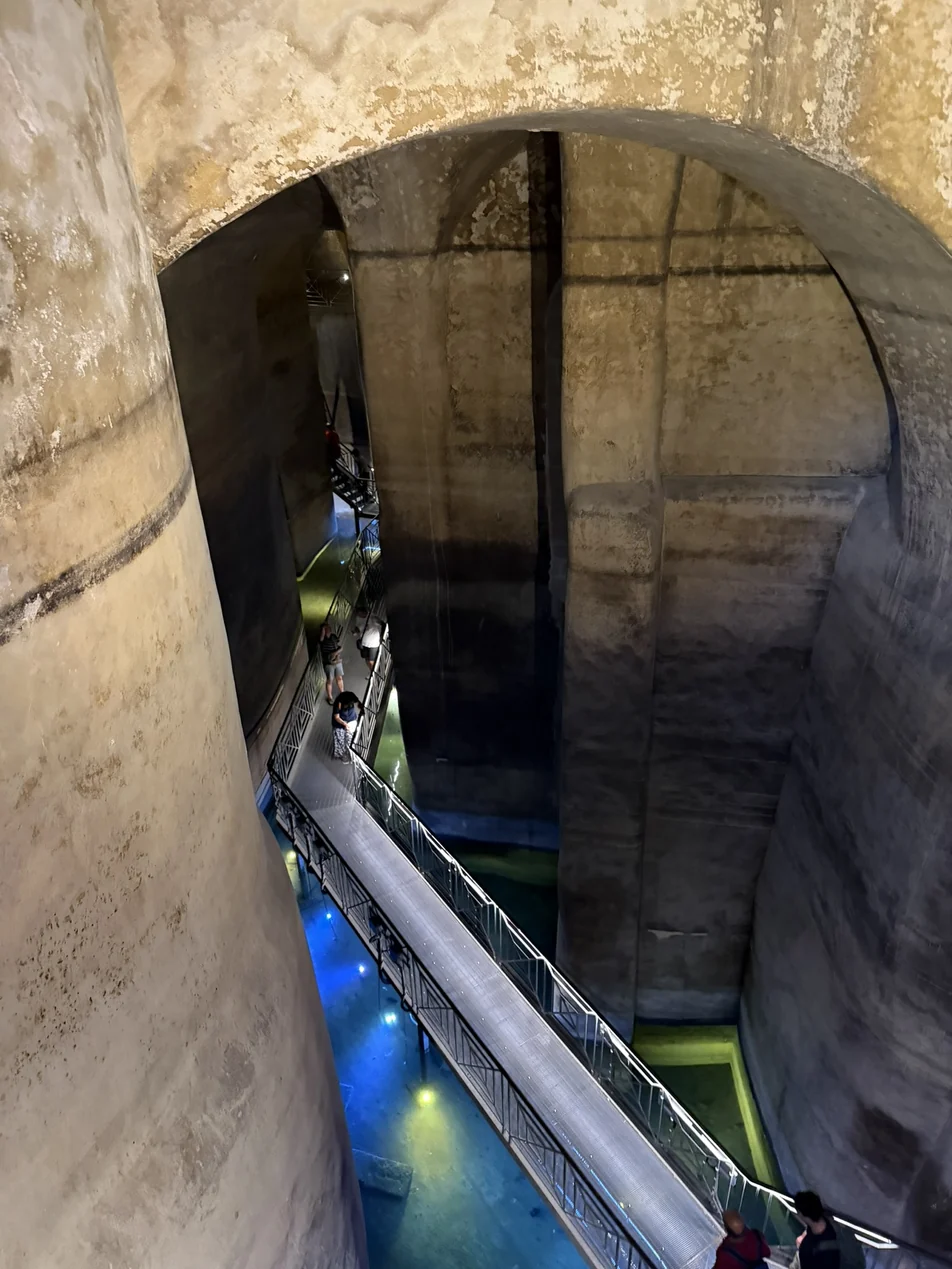
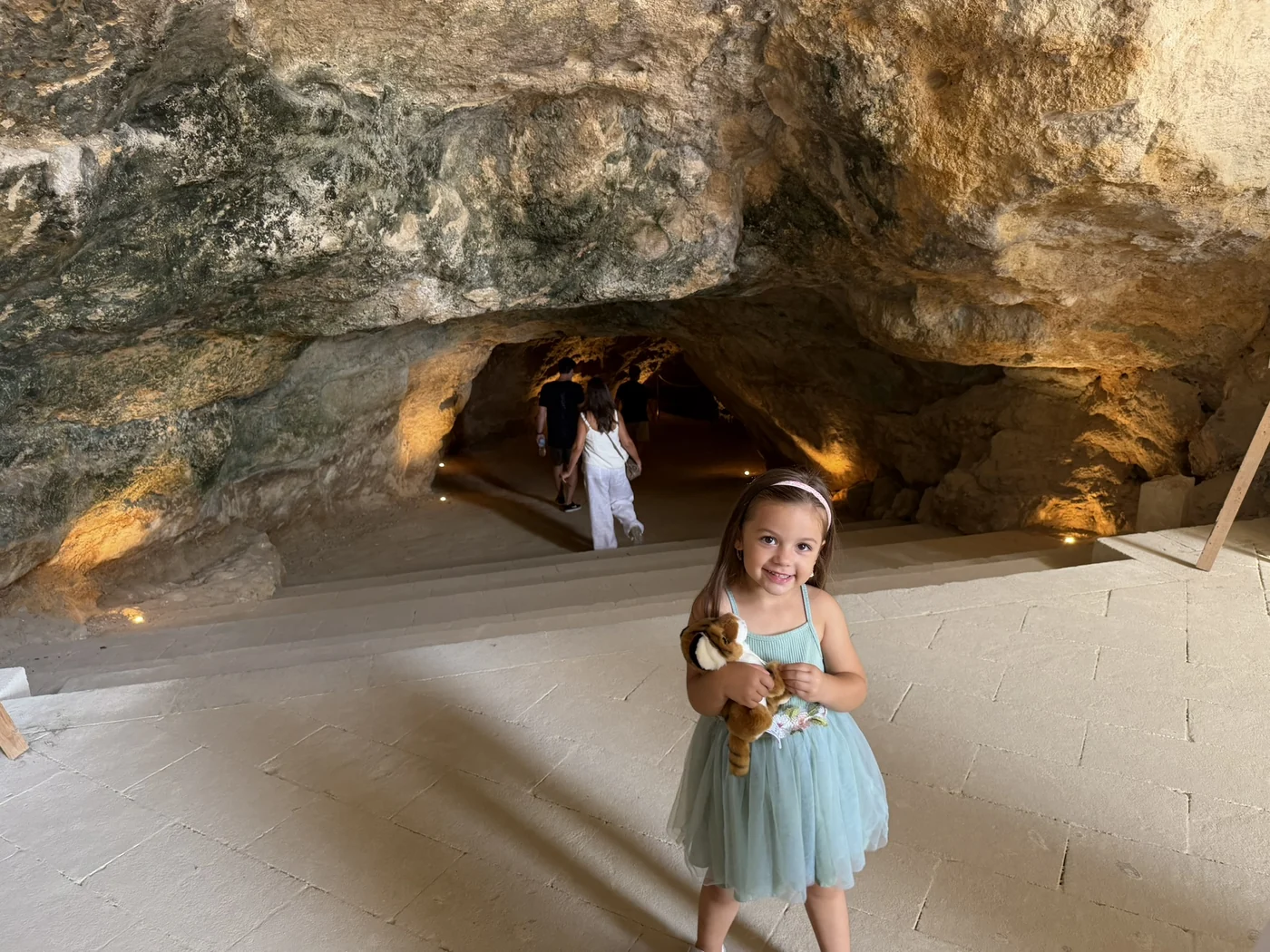
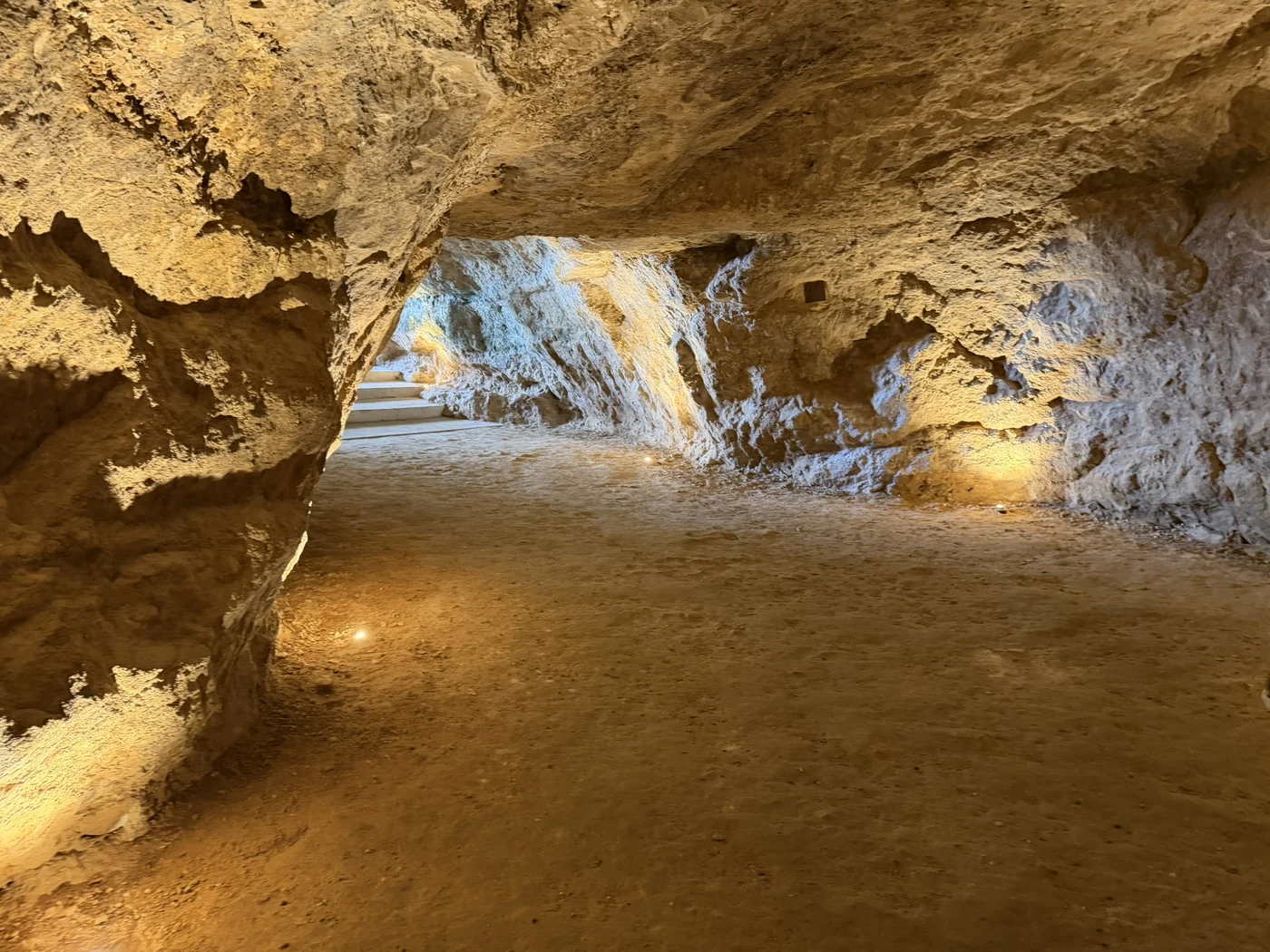
The first thing we did in Matera was go underneath it. Beneath Piazza Vittorio Veneto, the big open square at the top of the town, there is an enormous cistern cut into the rock — vaulted, plastered, and deep enough that the walkway over the water feels like a bridge. The Palombaro Lungo collected and stored the town's water, and standing in it is the fastest way to understand that Matera is a city carved downward rather than built upward.
It is lit and it is cool, and it does not take long. Going in at 18:17, before dinner and before the evening walk, turned out to be the right order: it sets up everything you look at afterwards.
Inside the cistern at 18:17.The walkway over the water.
What it isA huge rock-cut water cistern beneath Piazza Vittorio Veneto.
AllowHalf an hour at most.
WhereEntrance on the main square, at the top of the town.
NoteTicketed, and hours vary — check on the day.
We wentEntered 18:17, 20 September 2026.
The Evening Walk: Where to Stand When the Lights Come On
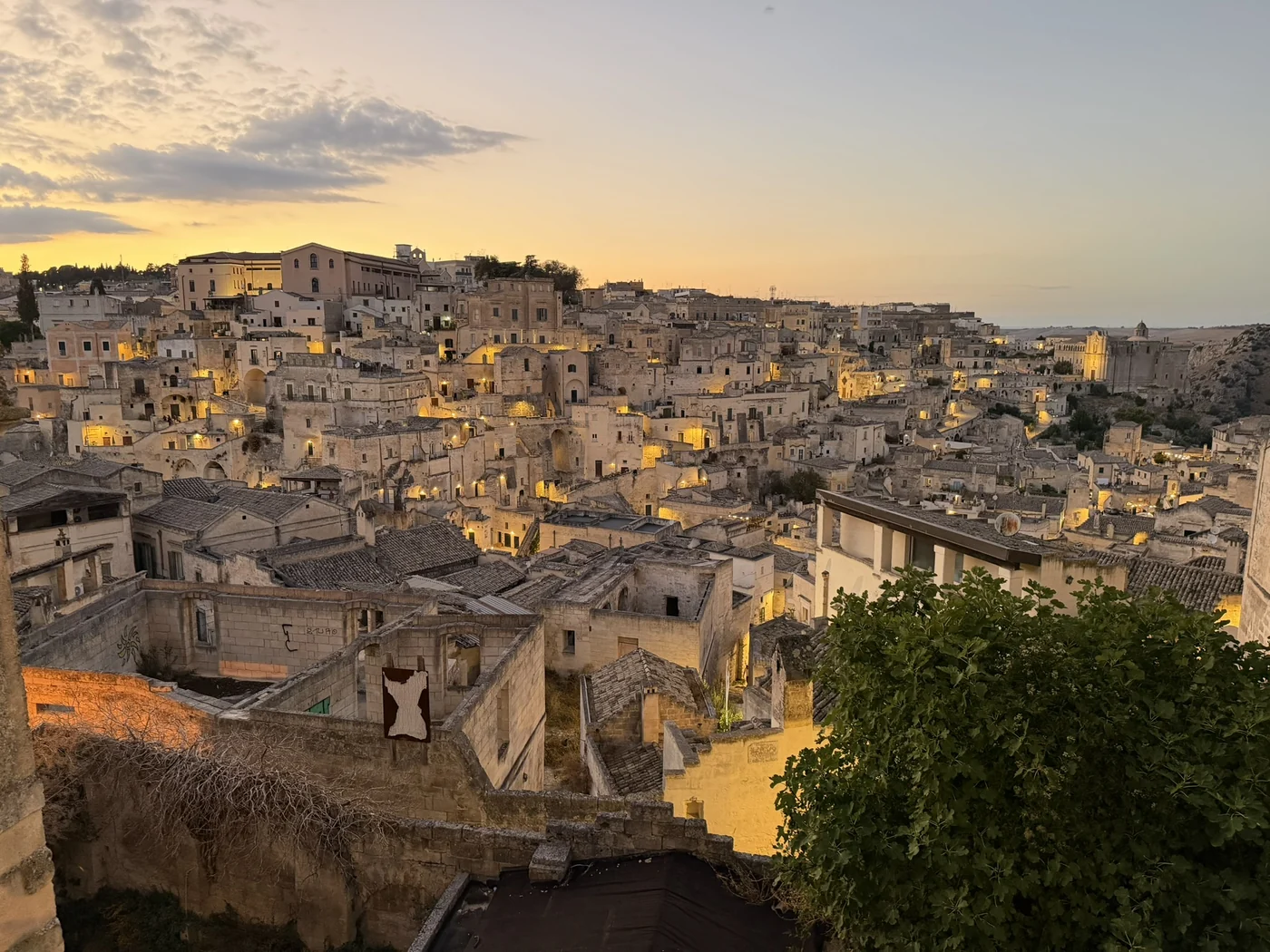
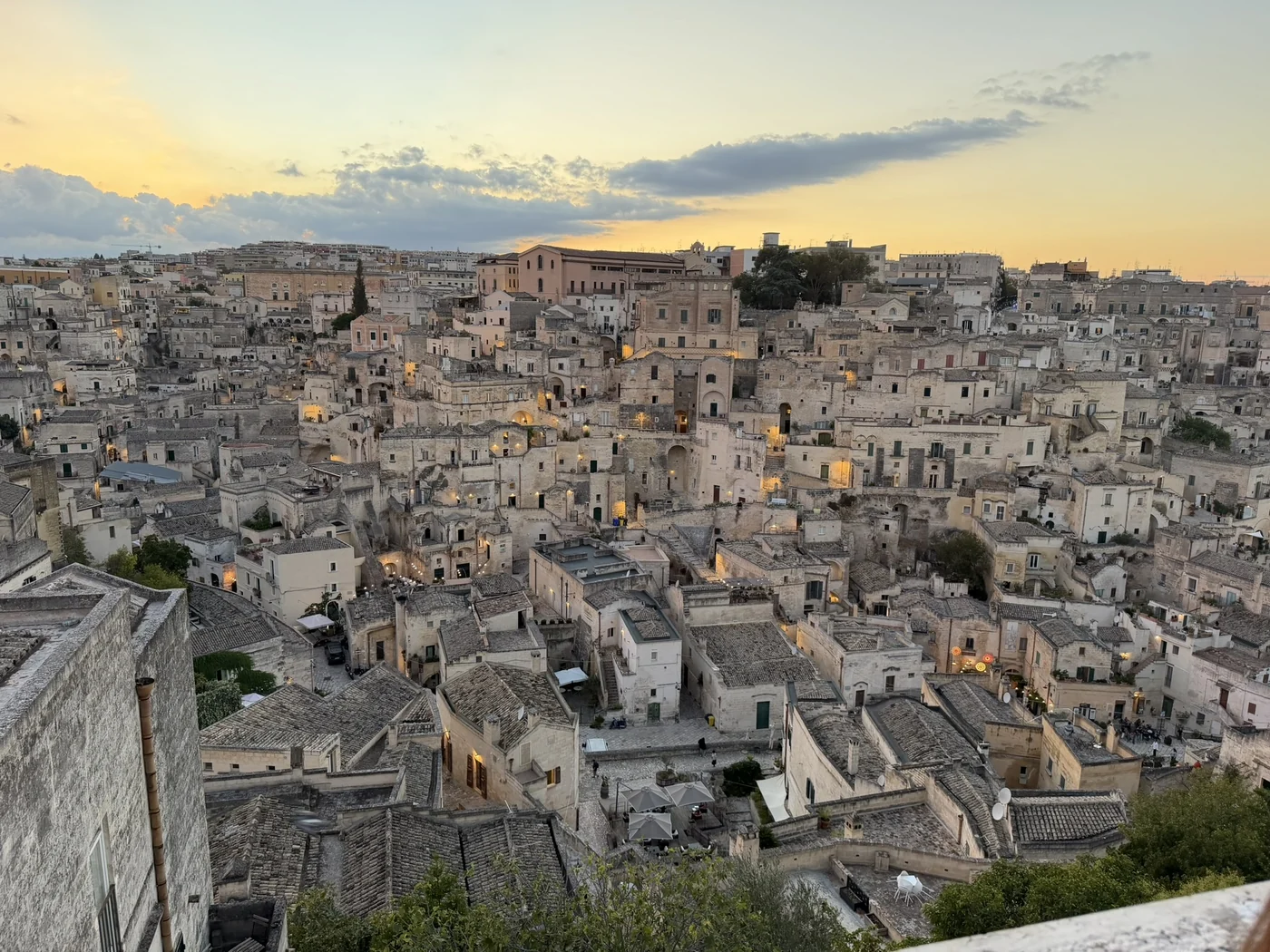
Matera is a town you look at from the opposite side of itself. The Sassi fill a ravine, so from the terraces along the top you are looking across and down at a whole hillside of stone houses stacked on each other's roofs — and between about seven and half past, that hillside turns gold and then lights up one window at a time.
The names are worth knowing before you walk it. The two cave quarters are Sasso Barisano and Sasso Caveoso, on two slopes of the same ravine, with Via Fiorentini running down through the middle between them. The viewpoint that gives you the whole thing in a single frame is the Belvedere Luigi Guerricchio, which was on our plan for exactly that.
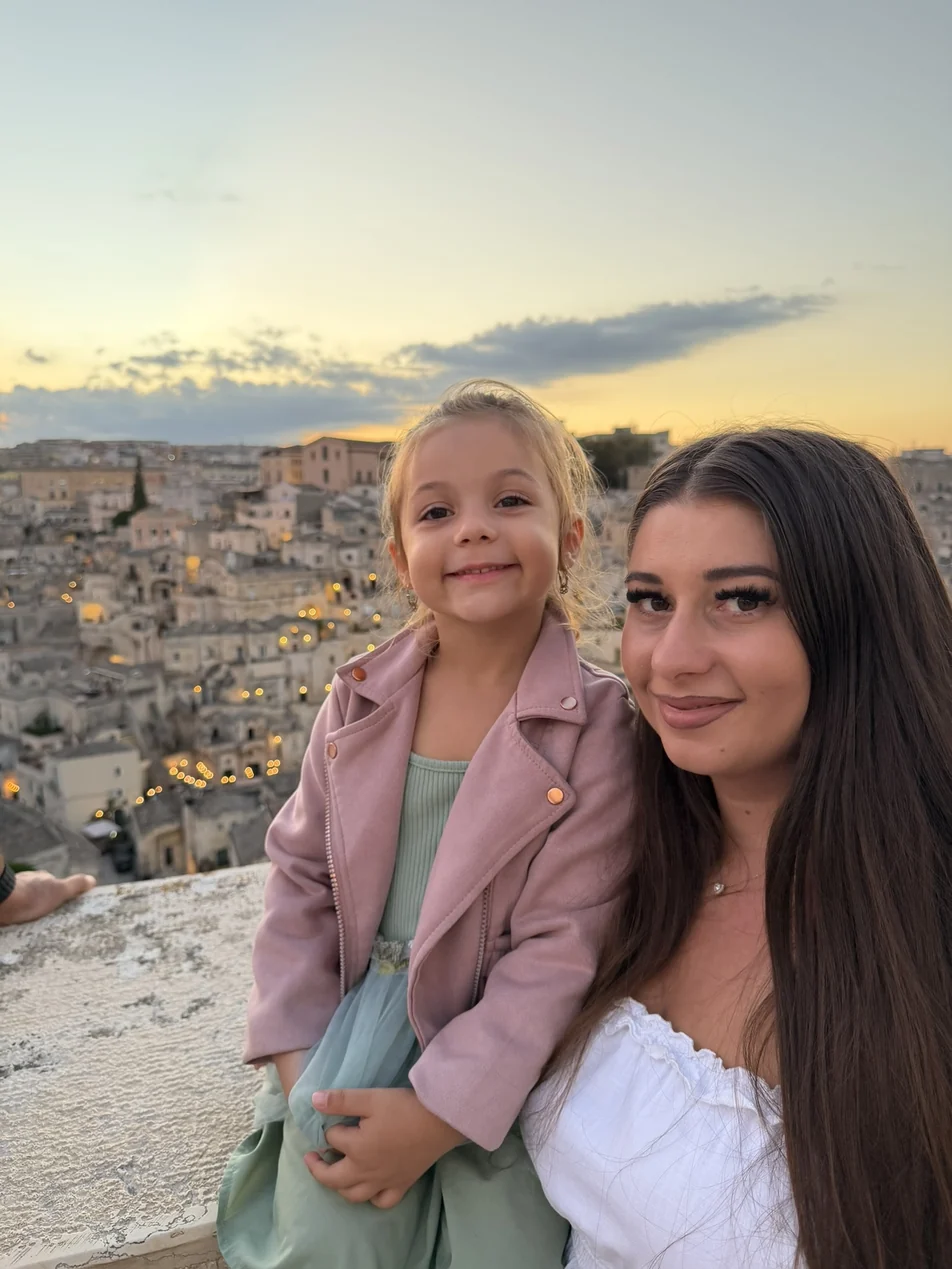
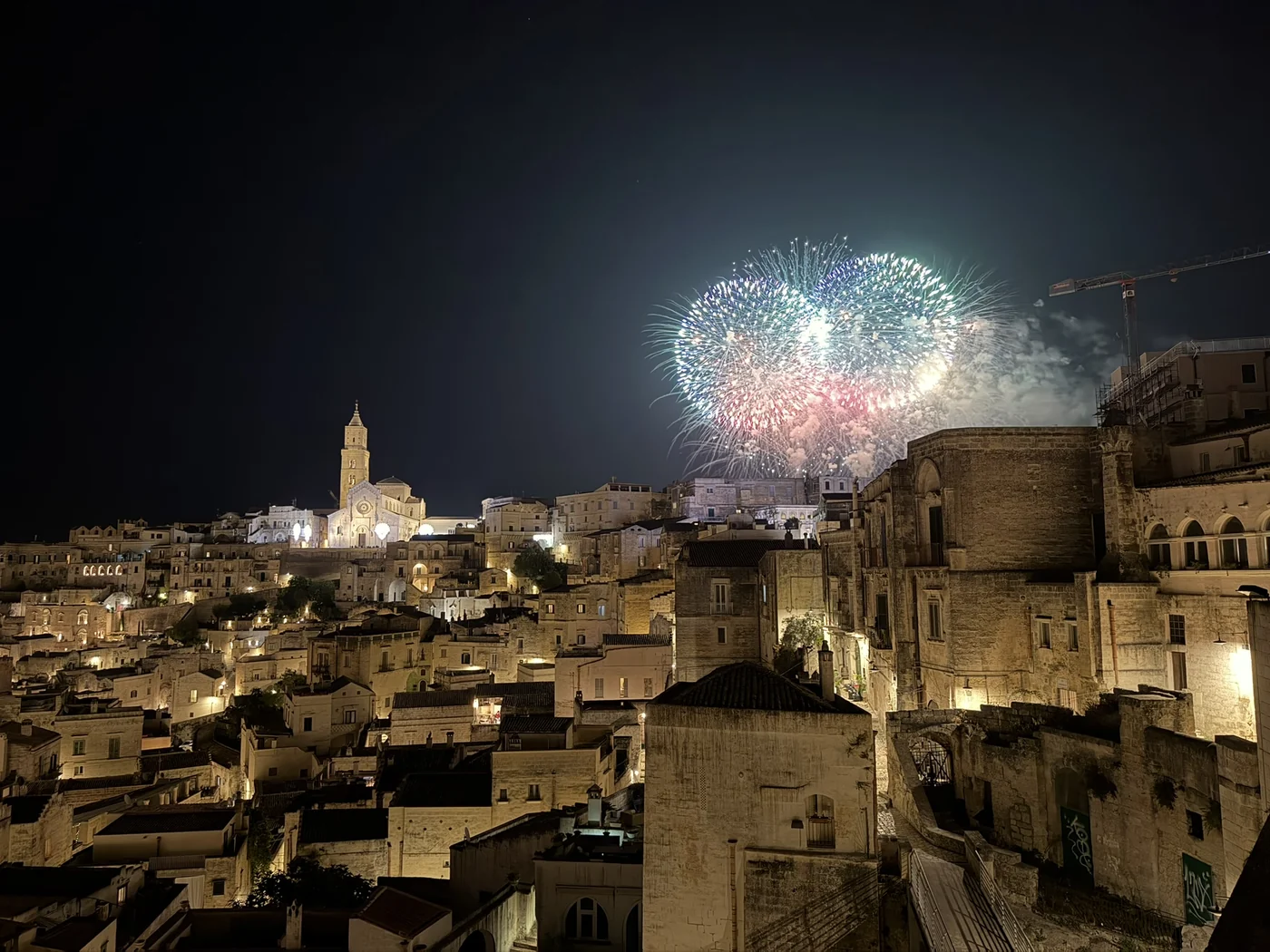
The terraces run along the edge of the upper town with railings and balustrades and nothing to pay. We walked them from half six to quarter past seven, and our photographs from it are twenty minutes apart: the terrace at 18:30, the hillside gold at 18:59, and by 19:11 — the picture at the top of this page — the lamps are on across the whole ravine. There is no trick to it: find the edge, and wait.
The terrace at 18:30.Golden hour at 18:59.
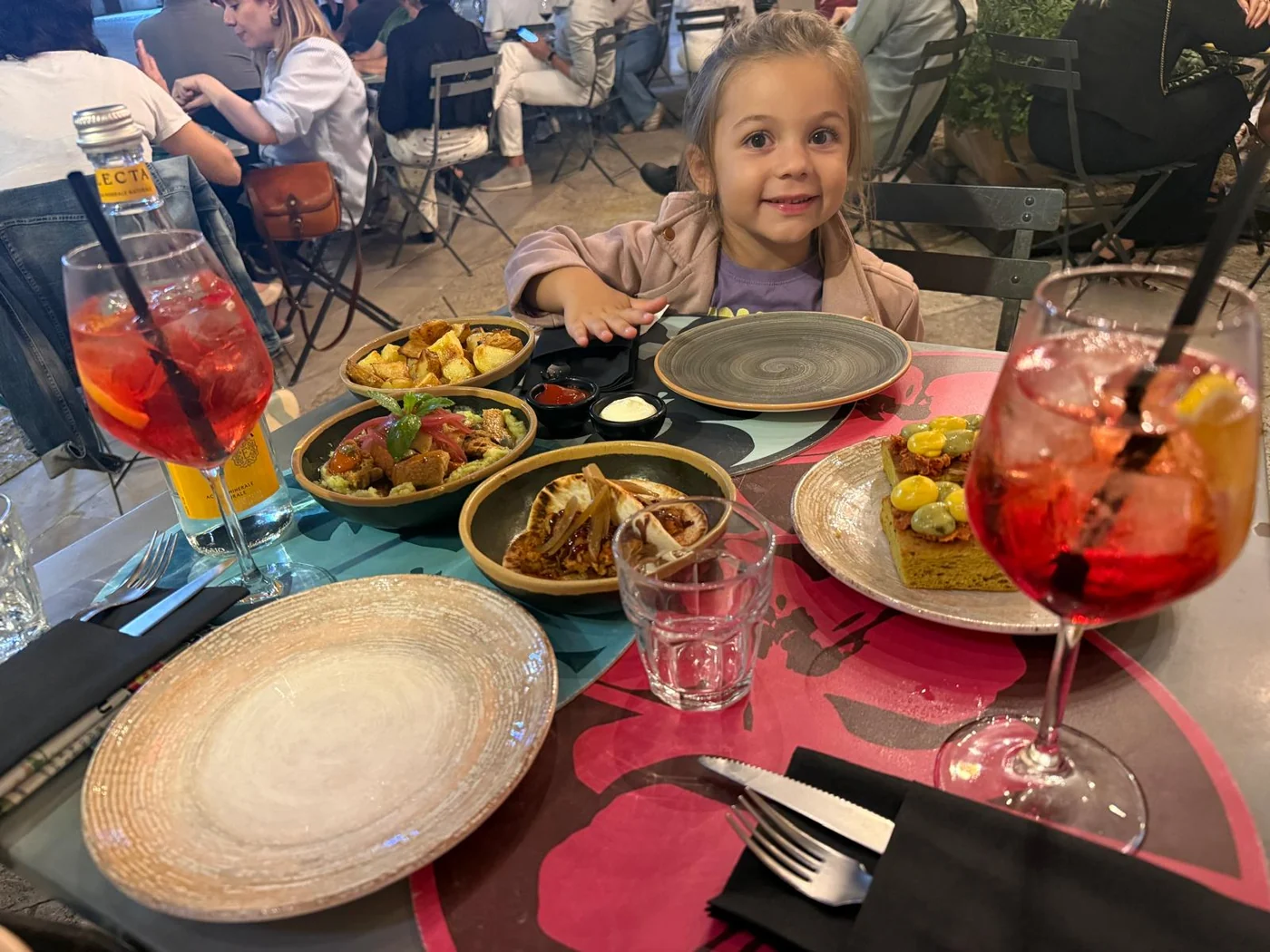
We ate outside that evening, at a table on a street in the upper town — small modern plates rather than a long Lucanian dinner: roasted potatoes, a bowl of green purée under croutons and pickled onion, something pulled and slow-cooked on grilled bread, and a slice of yellow cornbread topped with meat and olives. Two spritzes, and a child who was done walking.
We cannot tell you the name of this one. We did not write it down and the photograph gives nothing away — no sign, no menu, no receipt in shot. Rather than name a plausible Matera restaurant and risk sending you to the wrong door, we are leaving it blank. If we work out which it was, it goes in here.
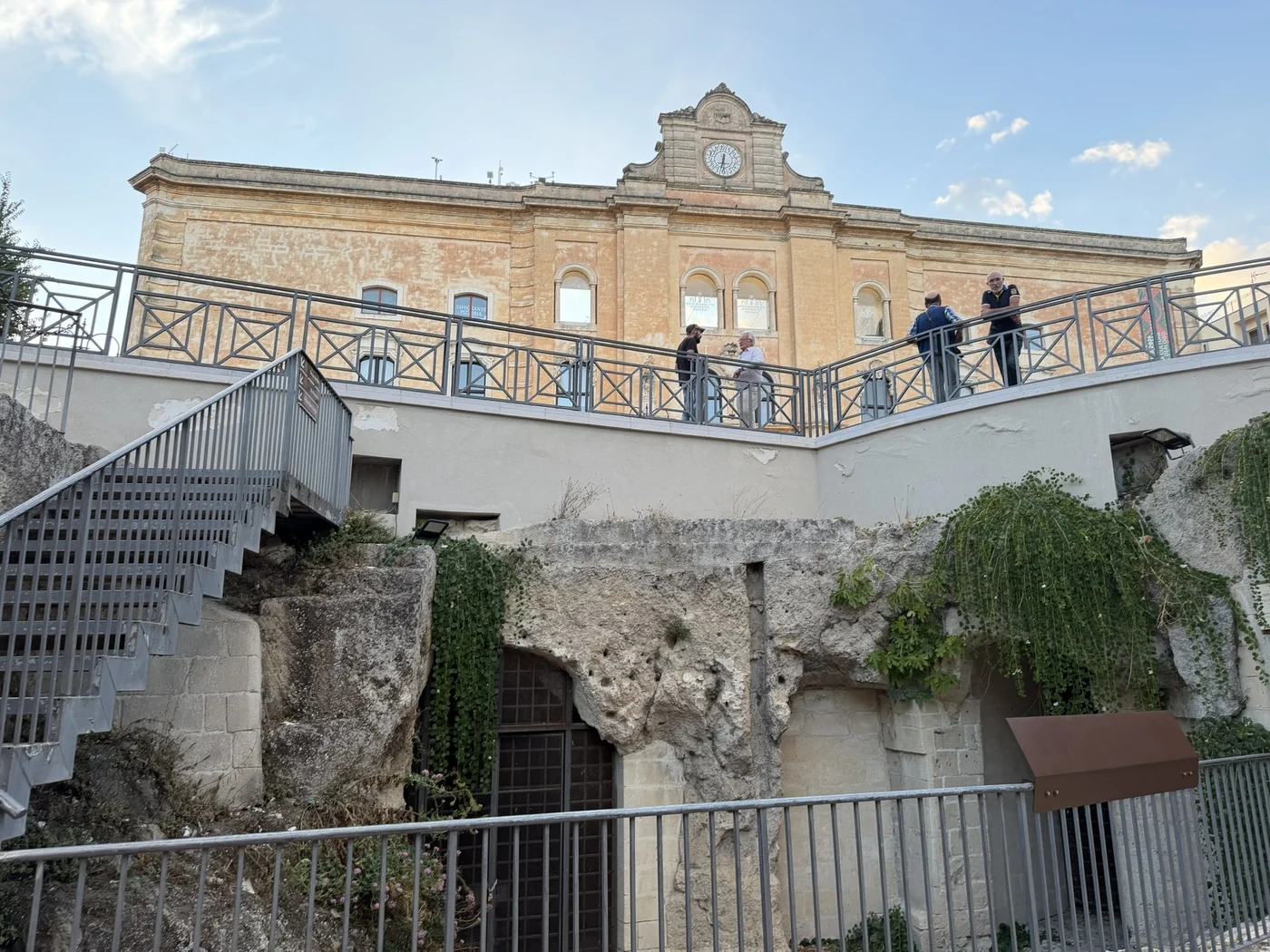
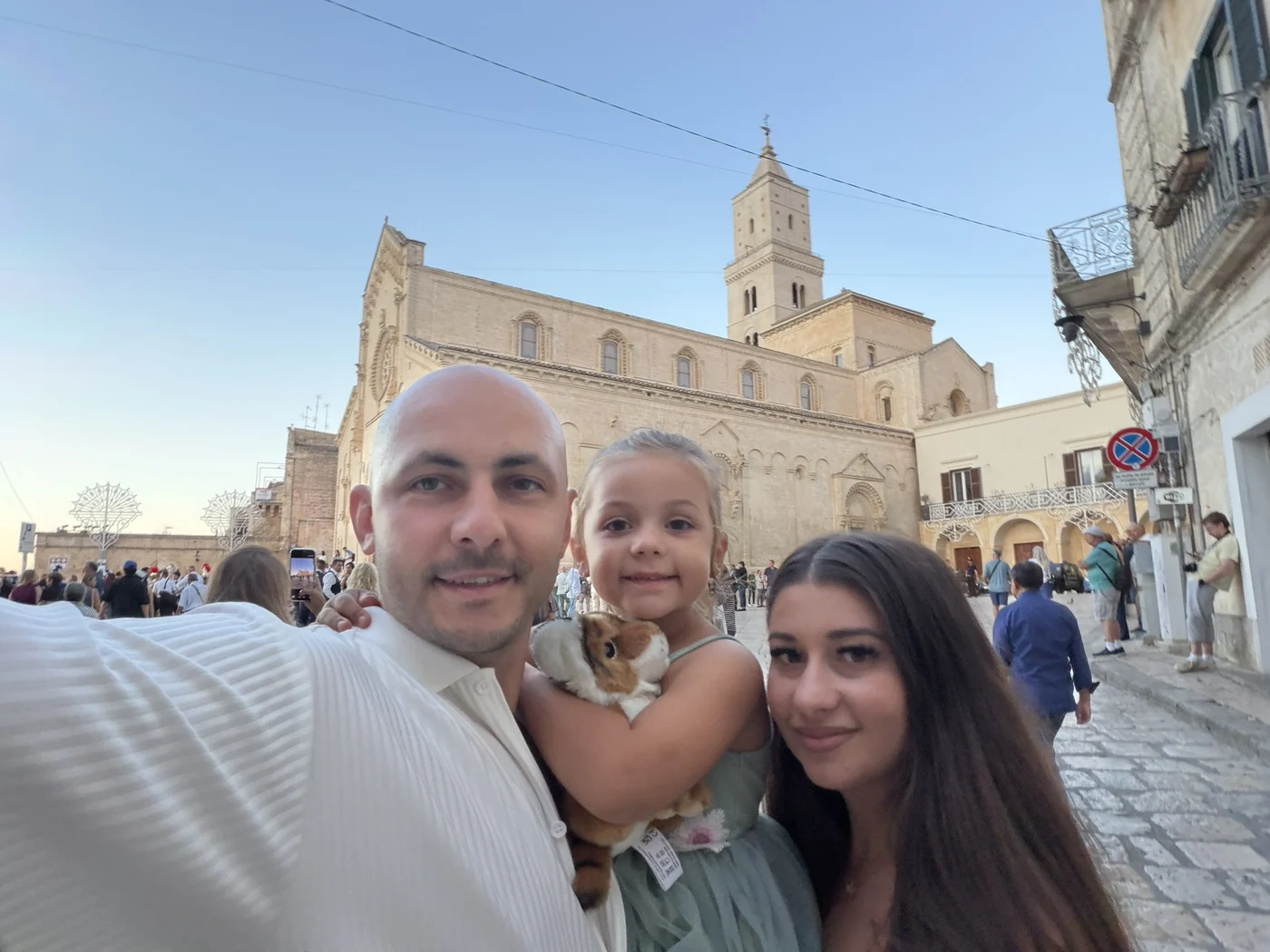
Dinner outside in the upper town, 20 September.The cathedral sits on the ridge above it all, and the walk up to it through the upper town is the natural way to finish the evening before you go looking for dinner.
Below the cathedral at 18:52.On the terrace at 19:01.
WhereThe terraces along the top of the upper town — the Belvedere Luigi Guerricchio for the full view.
The two quartersSasso Barisano and Sasso Caveoso, with Via Fiorentini between them.
WhenFrom about 18:30 in late September.
CostNothing.
BringA jacket — it drops quickly once the sun is off the stone.
We wentFreeWalked 18:23–19:11, 20 September 2026.
And Then, at Twenty to Eleven, Fireworks
We were not expecting this and we had not planned for it. At 22:39 on 20 September, fireworks went up over the far side of the ravine and burst above the Sassi — the whole hillside lit from below by its own street lamps and from above by the rockets.
We do not know what the occasion was, and we are not going to guess at one and print it as fact. What we can tell you is that it happened, that late September is the tail of the festival season across southern Italy, and that if you are in Matera for a night it is worth asking your host whether anything is on. Ours would have known.
Over the Sassi at 22:39.
When22:39, 20 September 2026.
What forWe do not know — we never found out.
Worth doingAsk your host what is on while you are there.
We saw thisPhotographed 22:39, 20 September 2026.
Morning: Coffee Over the Rooftops, and the Canyon Opposite
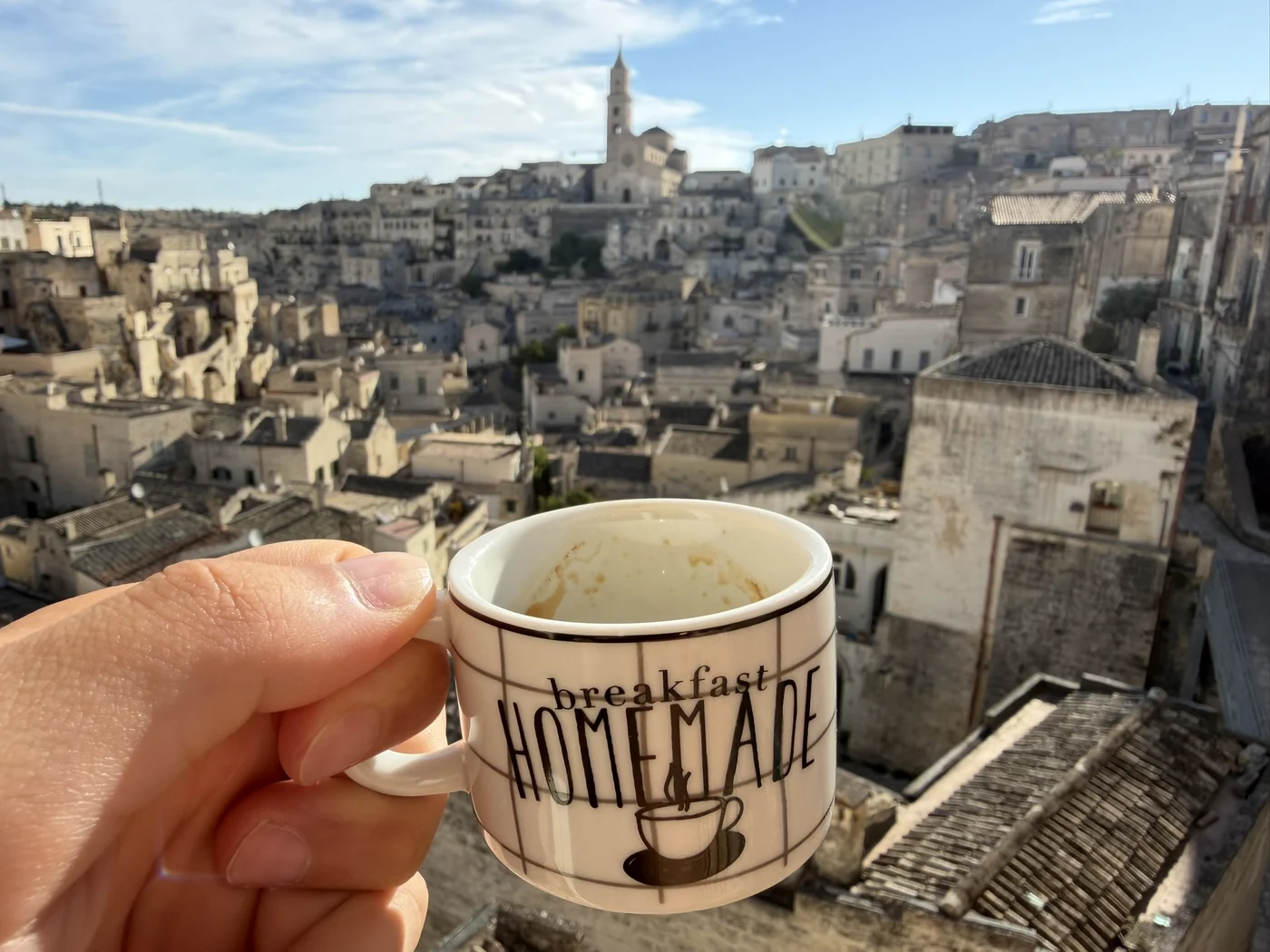
The reason to sleep in the Sassi arrives with breakfast. At quarter to nine we were drinking coffee on a terrace with the stone town dropping away below — the same view as the night before, emptied of people and lit from the other side.
Breakfast at 08:44.
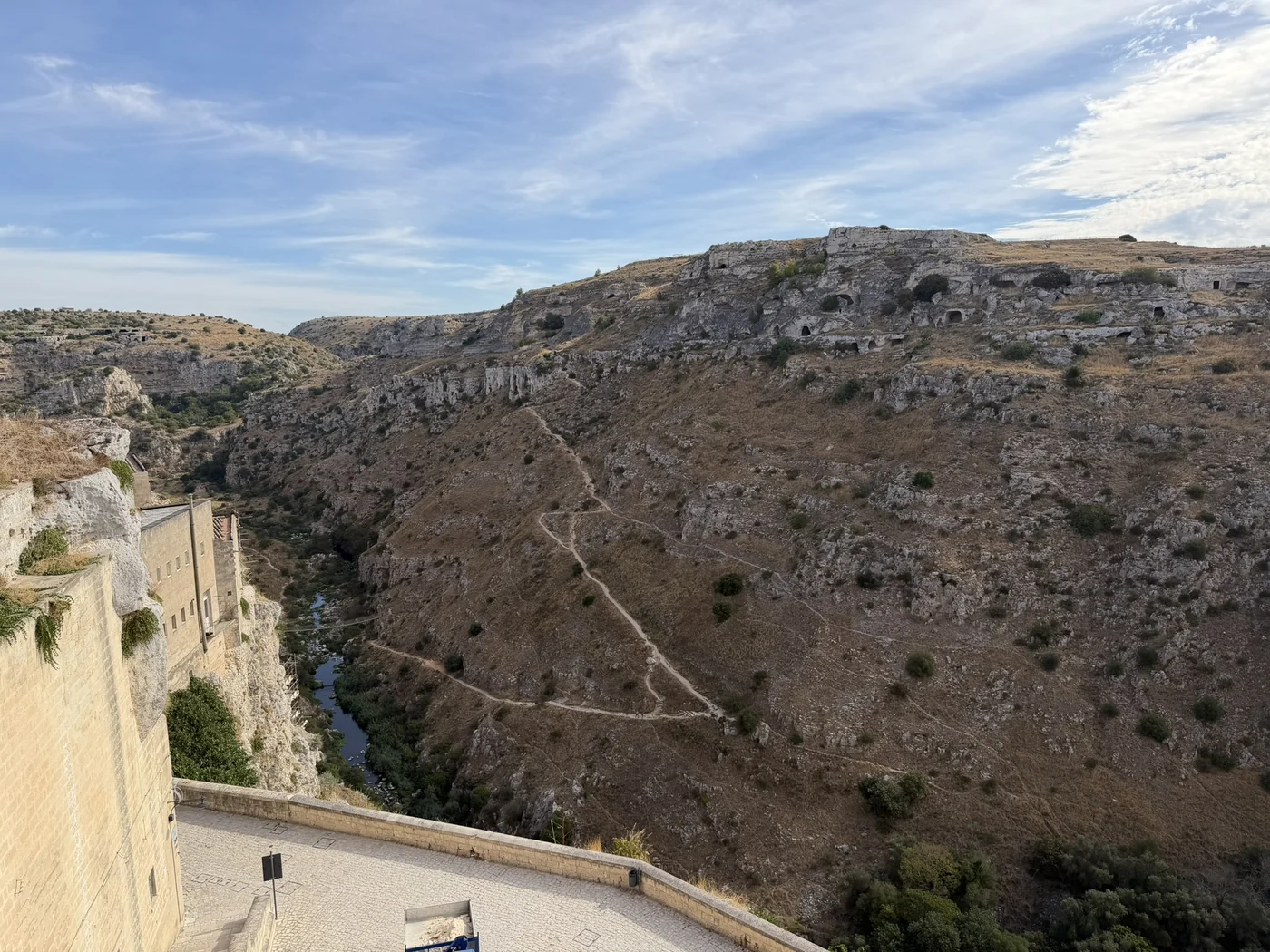
Then walk to the edge and look the other way. Across from the Sassi the ground falls into the Gravina, a limestone canyon with a river at the bottom and the Murgia plateau beyond it, pocked with caves. It is the thing that explains the town: people lived in those caves first, then crossed over and cut the same kind of caves into this side.
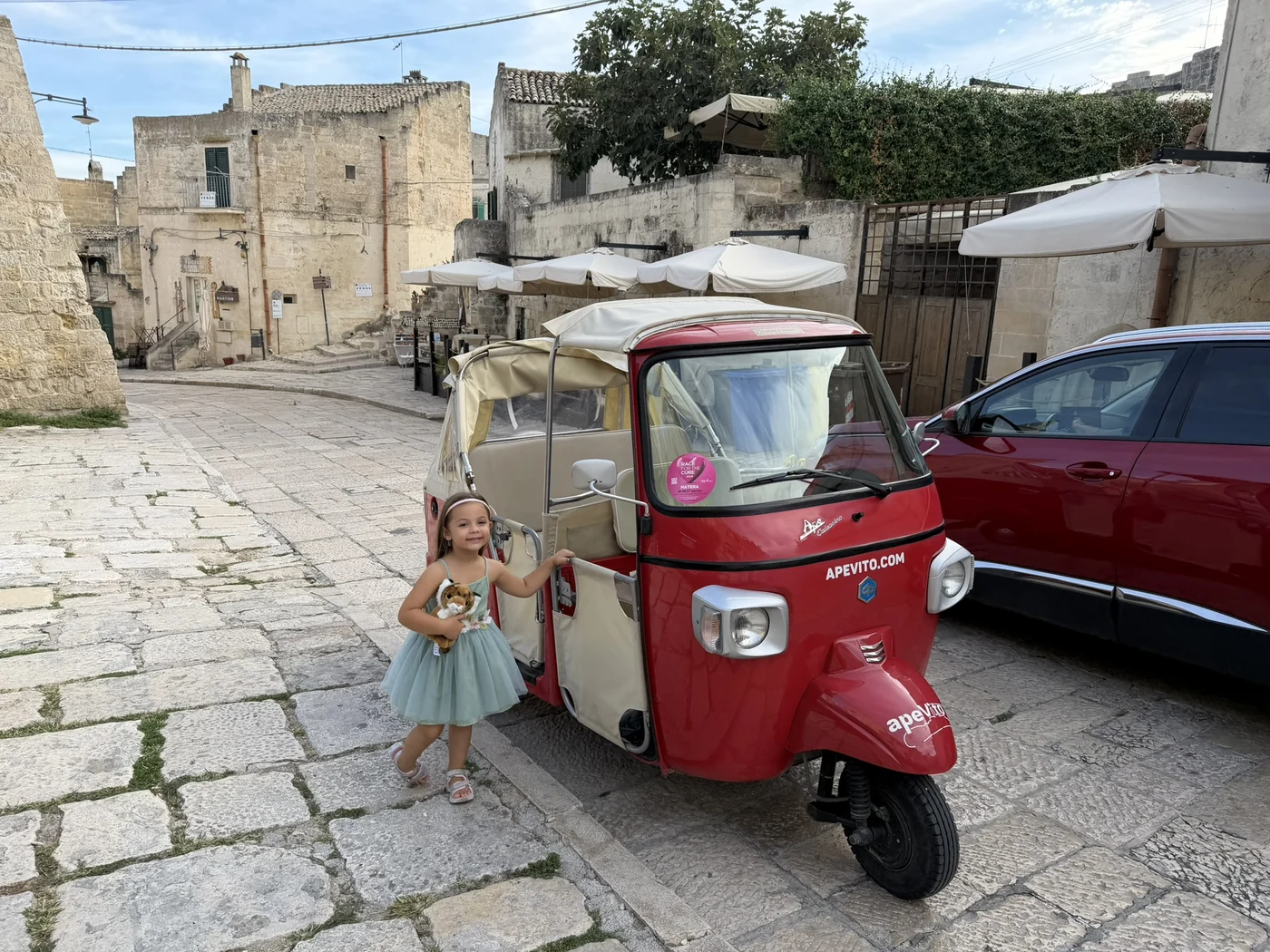
The Gravina at 09:48.Tuk-tuks work the Sassi lanes too, 09:44.
BreakfastOn a terrace in the Sassi. Worth paying for.
The GravinaThe canyon opposite. Free, and a five-minute walk from the terraces.
Getting aroundSteep steps everywhere. Tuk-tuks work the lanes if you need them.
We wentPhotographed 08:44–09:48, 21 September 2026.
A Cave House, a Cave Church, and What People Actually Lived In
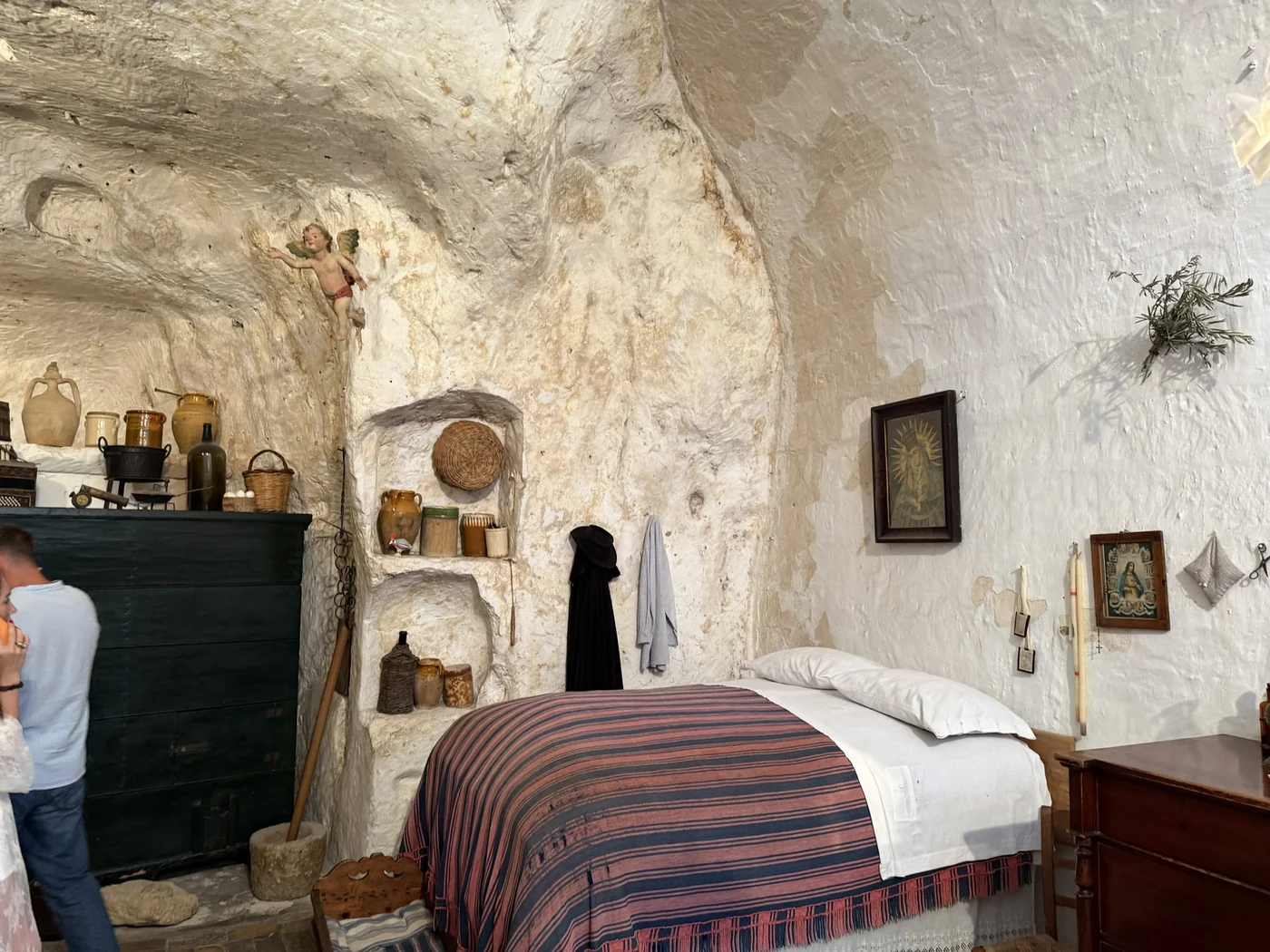
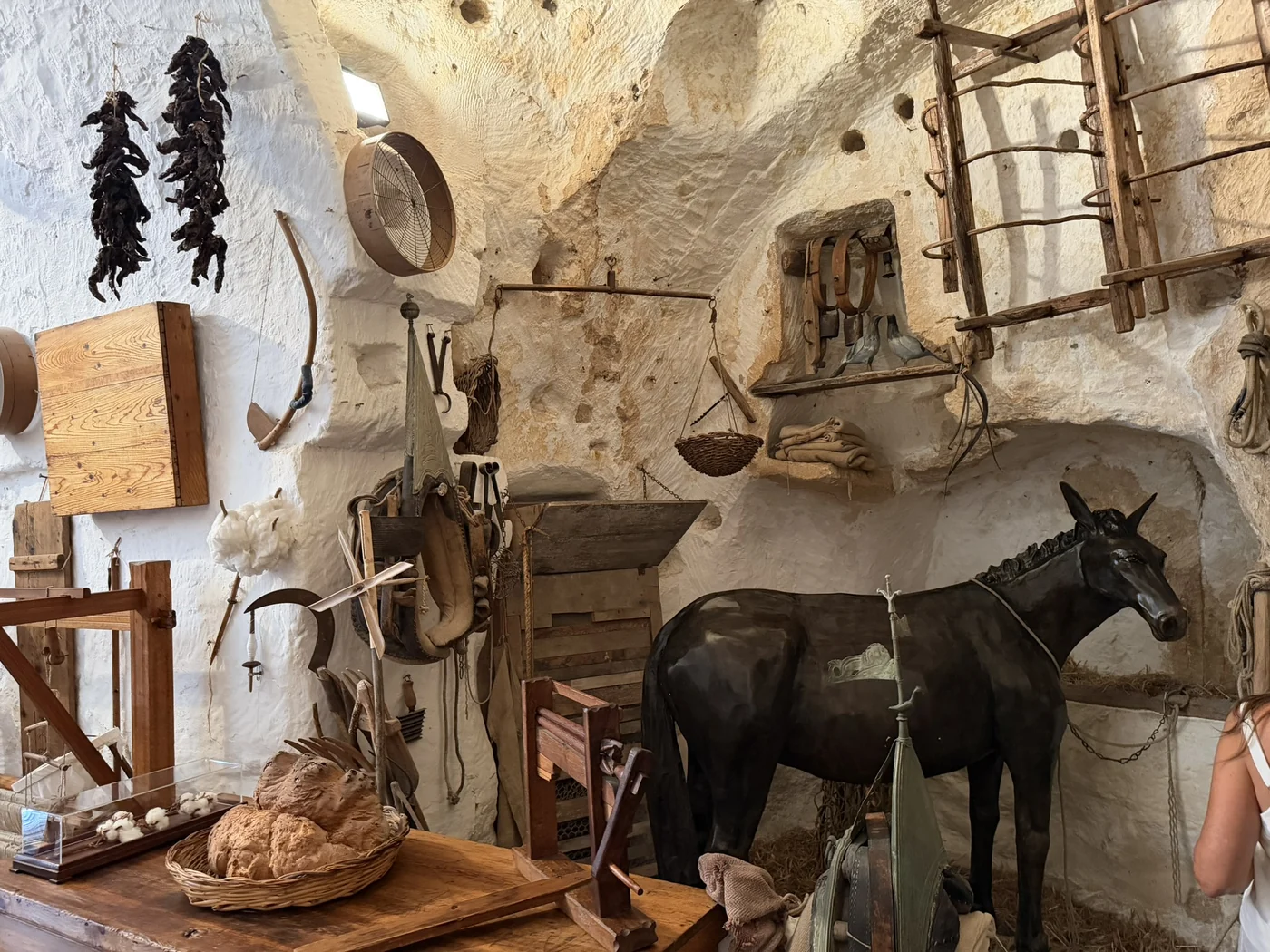
Looking at the Sassi from a terrace tells you nothing about living in them. For that you have to go inside, and Matera has furnished cave dwellings — case grotta — kept open as museums for exactly this reason. One of them was on our plan by name. One room, cut into the rock. A bed. A chest. A hearth. Hooks and tools on the wall, and a stall at the back where the animals were kept, in the same room as the family.
That is not a reconstruction of the distant past. People were living like this into the 1950s, when the Italian state moved the entire population of the Sassi out to improve sanitation (UNESCO). People only began returning in the 1980s. Standing in the room makes the rest of the town land differently.
A furnished cave house at 09:59.The animals shared the room, 10:02.
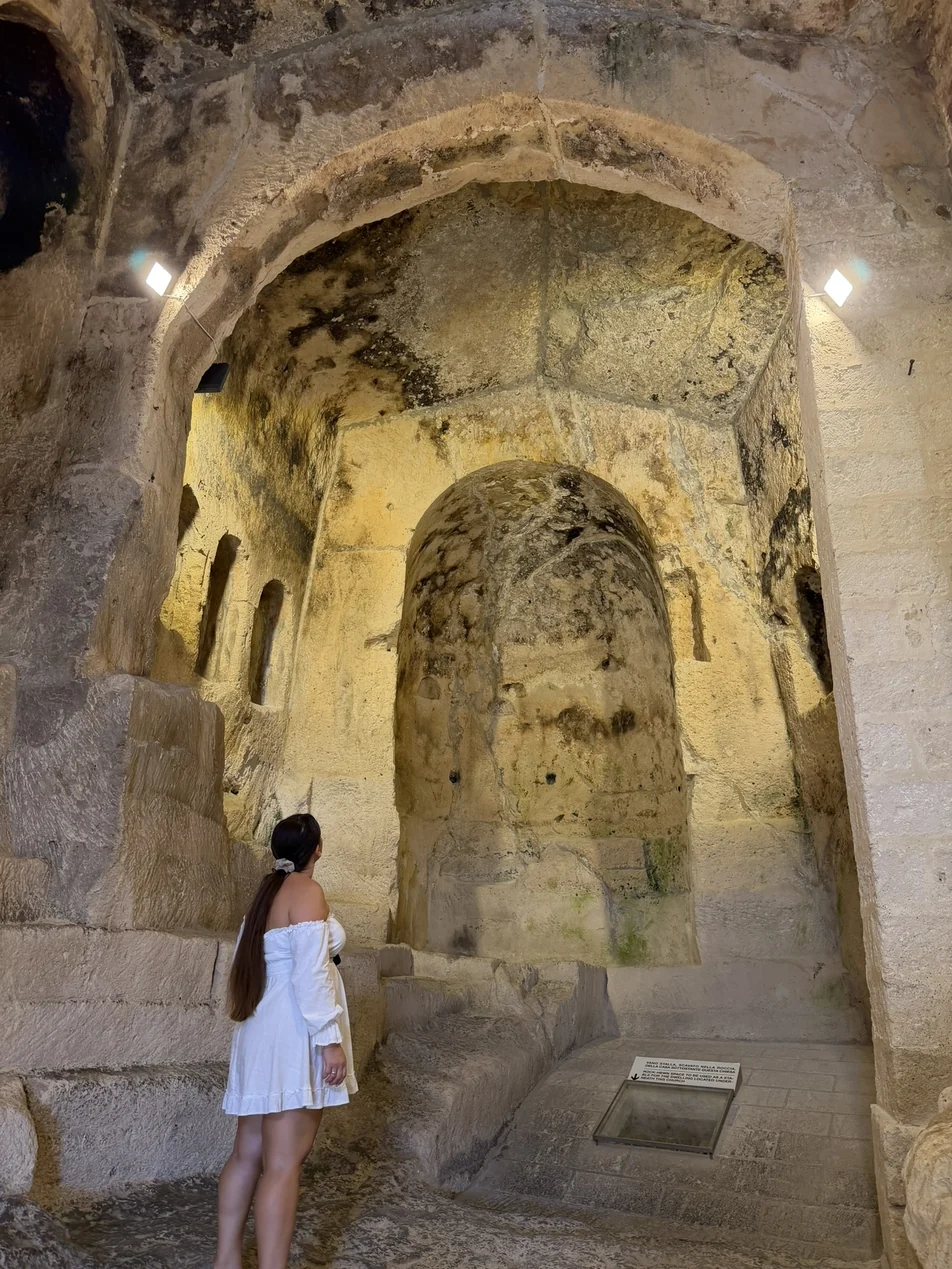
The same rock holds churches. Matera and the gorge opposite are full of chiese rupestri cut straight into the stone, and the ones inside the town are a few minutes each: carved apses, pillars left standing out of the living rock, and in places the remains of frescoes. We went into a large cave at ten past ten and a rock-cut church a minute later, and the pair of them is the best hour in Matera.
Going in, 10:07.Inside, 10:08.
A church cut into the rock, 10:09.
Cave houseA casa grotta — a dwelling furnished as it was lived in. Ticketed; check the price on the day.
Rock churchesThere are many in and around Matera, individually ticketed. We went into one.
AllowAn hour for both, comfortably.
NoteCool inside, uneven underfoot, low in places.
We wentPhotographed 09:59–10:09, 21 September 2026.
On the ground
Driving In, Parking and the Stairs
Matera is about an hour from Alberobello and a bit over an hour from Bari. We came from Zoosafari at Fasano in the late afternoon and left for Bari late the following morning, which is a comfortable shape for one night.
Do not try to drive into the Sassi. The lower town is steps, lanes and restricted traffic. Park in the upper town and walk down — and if you are staying in the Sassi, ask your host exactly where to leave the car and how to reach the door, because “two hundred metres away” in Matera can mean a hundred steps.
It is a town of staircases. Everything is up or down, the stone is polished smooth in places, and a pushchair is not realistic. Children do fine; wheels do not.
Sleep in the Sassi if you can. We paid €140.12 and the evening and the breakfast view were the two best parts of the stop. Staying in the modern town above gets you the same sights and none of the hours around them.
Questions
Matera FAQ
Is Matera in Puglia?
No. It is in Basilicata, over the regional border. It is in this trip because it is about an hour from the trulli country and far too good to skip on a technicality.
How long do you need in Matera?
An evening and a morning covers the cistern, the viewpoints, a cave house and a rock church. Two nights would let you walk into the Gravina and across to the Murgia caves, which we did not have time for.
What are the Sassi?
Two districts of houses cut into and built out of a limestone ravine, lived in since prehistory, cleared by the state in the 1950s and now a UNESCO World Heritage Site.
What is the Palombaro Lungo?
A very large rock-cut water cistern underneath the main square, open to visit. It does not take long, and it is the best possible introduction to the town.
Is it hard going with a child?
It is steps almost everywhere and the stone is slippery smooth in places. A child on foot is fine; a pushchair is not.