
Roads of Adventure
HomeDestinationsTravel MapTravel SmartOur Story
Spain3 daysGuide

3 Days in Málaga: Itinerary

The Alcazaba, the Gibralfaro view, and New Year's Eve on the Plaza de la Constitución.

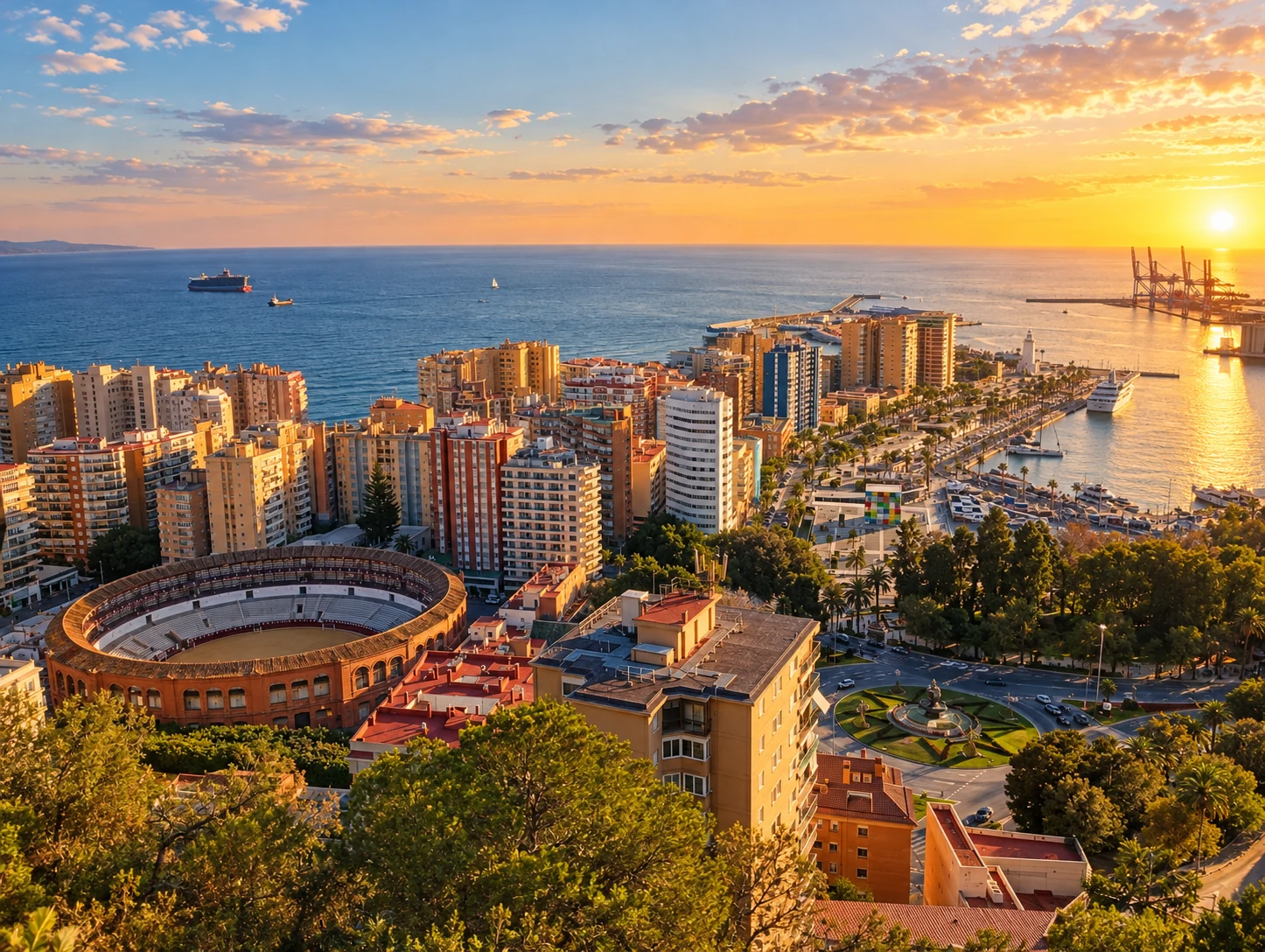
Málaga at sunset from the Gibralfaro: La Malagueta bullring in the foreground, the city running down to the port with a cruise ship and the cranes catching the low sun.
VisitedYes — in person
Trip dates26 December 2024 – 4 January 2025
Prices last verifiedSeptember 2026
Sights covered8

Málaga in short

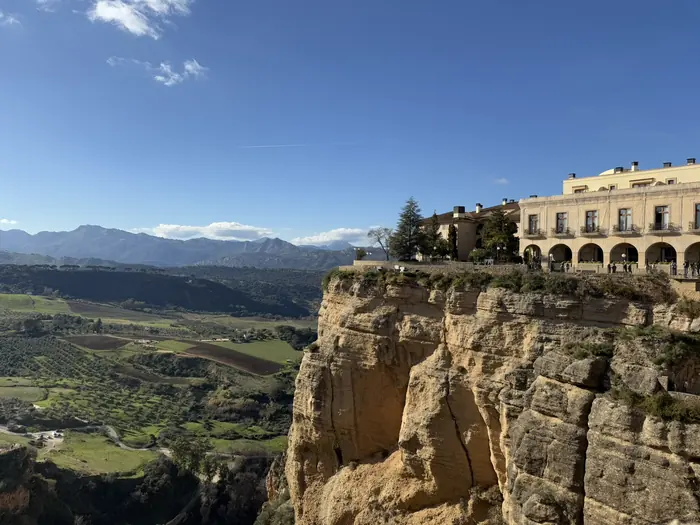
  • Use Málaga as a base, not just a stop. Caminito del Rey, Ronda, Setenil and Gibraltar are all day trips from here, and Córdoba is an hour away by train — which is why we gave it four nights.
  • The Alcazaba and Gibralfaro are free from 14:00 on Sundays. Combined ticket is €10 otherwise, valid 48 hours.
  • Walk up to Gibralfaro rather than taking the bus — the path along the Alcazaba's outer wall is the best free thing in the city.
  • New Year's Eve here is worth planning a trip around. Twelve grapes, one per chime, in Plaza de la Constitución.
  • Nothing needs booking in advance except a New Year's Eve dinner table.

On this page

Two champagne flutes filled with twelve peeled seedless grapes, held up in a New Year's Eve crowd in Málaga.

New Year's Eve in Málaga: The Twelve Grapes, and How It Works

If you only take one thing from this page: las doce uvas de la suerte. At midnight the clock strikes twelve, and you eat one grape on each chime — twelve grapes in roughly thirty-six seconds, for twelve months of luck. Everybody does it. Nobody manages it gracefully. It is the single most endearing national tradition in Spain.

New Year's Eve crowd in central Málaga wearing party glasses and hats under Christmas lights.
Plaza de la Constitución, five minutes before. 23:44

The practical part: buy your grapes in advance. Supermarkets sell them ready-portioned in tubs or, better, in champagne flutes, peeled and sin semillas — seedless — which matters enormously more than it sounds like it should. Twelve grapes with pips, at one per second, is not achievable.

Málaga's countdown happens in Plaza de la Constitución, at the top of Calle Larios under the Christmas lights, with a stage and a free concert that runs well past 01:00. It's busy but not crushing, it's outdoors, and it costs nothing. Restaurants run fixed-price cotillón dinners that need booking weeks ahead; the square needs nothing but grapes.
WherePlaza de la Constitución, at the north end of Calle Larios. Arrive by 23:30 for a decent position.
CostFree — plus about €3 for grapes and €10–15 for a bottle of cava. Restaurant New Year dinners run €80–150 a head and book out weeks ahead.
What to bringTwelve seedless grapes per person, in a cup you can hold with one hand. Buy them on 30 December — the shops are stripped on the 31st.
Best timing23:30 in the square, and stay past 01:00. The concert after midnight is better than the countdown itself, and the bars fill immediately.
The next morning1 January closes the city. Monuments, shops and most restaurants are shut until at least the afternoon. Plan a late start and don't book anything before 14:00.
We went
The Alcazaba of Málaga rising above the Roman theatre, with its terraced walls and gardens.

Alcazaba of Málaga: Hours, Tickets & Free Sunday Entry (2026)

An 11th-century Moorish palace-fortress built straight on top of a Roman theatre, using the theatre's own columns and capitals in its arches — which you can see, unmistakably, as you climb. It's the best-preserved alcazaba in Spain and the most pleasant to walk: a zig-zagging ramp through three sets of walls, past courtyards, water channels and viewpoints that open out over the port a little further with each turn.

The Roman theatre at the foot is free to look at from the street and has its own small interpretation centre. Don't pay twice by accident.

Opening hoursSummer (1 Apr–31 Oct) 09:00–20:00 · Winter (1 Nov–31 Mar) 09:00–18:00. Last entry 45 minutes before closing.
Price€7 on its own · €10 combined with Gibralfaro, valid 48 hours · €3 reduced. Under-6s free.
Advance bookingWalk-up
Free entrySundays from 14:00 — both monuments, every week. Also free on Andalusia Day and several other public dates.
Best timeMid-to-late afternoon. The fortress faces south-west over the port, so the last two hours of light run straight through the arches. We went in at 15:21 in January and that was about right.
Allow1–1½ hours. There's a lift from Calle Guillén Sotelo if the ramp is too much.
We wentFrom €7 · free Sun from 14:00
Málaga's port, cruise terminal and coastline seen from the walls of Gibralfaro castle.

Castillo de Gibralfaro: Hours, Tickets & the Best View in Málaga

The castle above the Alcazaba, built in the 14th century to garrison the fortress below, and connected to it by a walled corridor called the coracha. From the ramparts you get the whole city at once: the cathedral's single tower, the bullring directly below like a target, the port, and the Mediterranean running east toward the Malagueta.

Walk up, don't take the bus. The footpath climbs beside the Alcazaba's outer wall from near the Roman theatre — fifteen to twenty minutes, steep but paved, with viewpoints the whole way. Bus 35 from Avenida de Cervantes exists if you'd rather, but you'd be skipping the good part. Coming back down at dusk is even better.

Opening hoursSummer 09:00–20:00 · Winter 09:00–18:00. Last entry 45 minutes before closing.
Price€7 alone · €10 combined with the Alcazaba (48 hours) · €3 reduced.
Advance bookingWalk-up
Free entrySundays from 14:00
Best timeThe last 90 minutes before closing. Sunset from the ramparts over the port is the best free-ish view in the city — and in winter, closing at 18:00 means sunset lines up almost exactly with the last entry.
Allow1 hour on site, plus 20 minutes to walk up. Not wheelchair accessible.
We wentFrom €7 · free Sun from 14:00

Málaga Cathedral (La Manquita): Hours, Tickets & the Missing Tower

Officially the Cathedral of the Incarnation; universally La Manquita, "the one-armed lady", because the second bell tower was never finished. The popular story is that the money went to fund the American revolution; the archives don't really support it, and the truth is probably duller. Either way the asymmetry is the most recognisable thing about Málaga's skyline.

Inside it's enormous, bright and Renaissance, with a set of 17th-century choir stalls carved by Pedro de Mena that are worth the ticket on their own. Two things worth knowing: there's a free entry window daily from 08:30 to 09:00, very short and largely unadvertised. And the rooftop walk — normally the best part — has been closed for restoration, so don't pay the higher combined price expecting it.

Opening hoursMon–Fri 10:30–18:30 in winter, to 20:00 in high summer · Sat 10:30–18:00 · Sun 14:00–18:00.
Price€10 with audio guide · €15 for the version that includes the rooftop.
Advance bookingWalk-up
Free entryDaily 08:30–09:00. Thirty minutes, no audio guide, easy to miss.
RooftopClosed for restoration with no confirmed reopening — check before paying the €15 tier.
Best timeLate morning for the interior. The exterior and the single tower photograph best from Plaza del Obispo in the afternoon.
Allow45–60 minutes.
€10

Mercado de Atarazanas: Hours, What to Eat & Best Time to Go

Málaga's central market, behind a 14th-century Moorish marble gateway that survived from the Nasrid shipyards the building is named after — atarazanas means dockyards, and the sea used to come up to here. The far wall is a vast stained-glass window showing the city's own landmarks.

Three halls: fish, meat, and fruit and vegetables. The fish counters are the reason to come — this is a working Mediterranean port and the boxes are labelled with the boat. Around the edges are stand-up bars doing fritura malagueña, grilled prawns and vermouth from the barrel at market prices.

Get the timing right or it's pointless. The market is a morning operation: it closes for the day in the early afternoon and doesn't open at all on Sundays.

Opening hoursMon–Sat roughly 08:00–15:00. Closed Sundays and public holidays.
PriceFree — you pay for what you eat and drink.
Best time09:00–11:00 to see it working; 12:30–14:00 to eat in it. After 14:00 the stalls are packing up.
Allow30 minutes to walk through, 90 if lunch happens.
Free entry

Picasso's Málaga: Birthplace vs Museum, and Which to Choose

We did not visit either of these. They sat in our plan as optional — the things to do if the three days left us room — and they did not. We are writing them up anyway, because of everything we missed in Málaga this is the one we would put back in first, and because the choice between the two sites is the part nobody explains.

Picasso was born here in 1881 and left at ten, and the city has built a serious cultural identity on it. There are two separate sites and people routinely confuse them:

  • Casa Natal de Picasso, Plaza de la Merced — the flat where he was actually born, now a small museum of family photographs, early sketches and the christening records. Cheap, quick, and much more moving than it has any right to be.
  • Museo Picasso Málaga, in a 16th-century palace ten minutes away — a proper collection of around 200 works, many donated by the family, spanning the whole career. This is the substantial one.

If you have an hour, do the birthplace. If you have three, do the museum. We had neither to spare: the light went on the fortresses and the market, and both of those have to be done when the light is right. That is the whole reason this card exists as a recommendation rather than a report — we can tell you what the two places are and what they cost, but not what it feels like to stand in them.

Málaga does not fit into one day. A great many people treat it as a stop — a few hours off a Costa del Sol week, or an afternoon between a flight and somewhere else — and on that schedule the Alcazaba, the Gibralfaro and the cathedral will already use it up. Give the city a second day and the Picasso sites are exactly where that day should go. We had three days here and still ran out, which tells you something about how much is packed into a city most people only pass through.

Opening hoursCasa Natal daily roughly 09:30–20:00 · Museo Picasso daily 10:00–19:00 (later in summer).
PriceCasa Natal about €3 · Museo Picasso about €12 for the permanent collection, more with temporary exhibitions.
Advance bookingWalk-up outside August.
Free entryThe Museo Picasso is generally free in the last two hours on Sundays. Confirm on the day.
Allow45 minutes for the birthplace, 2–3 hours for the museum.
Planned, not reachedFrom €3Researched, not visited — prices and hours checked, the visit is not ours.
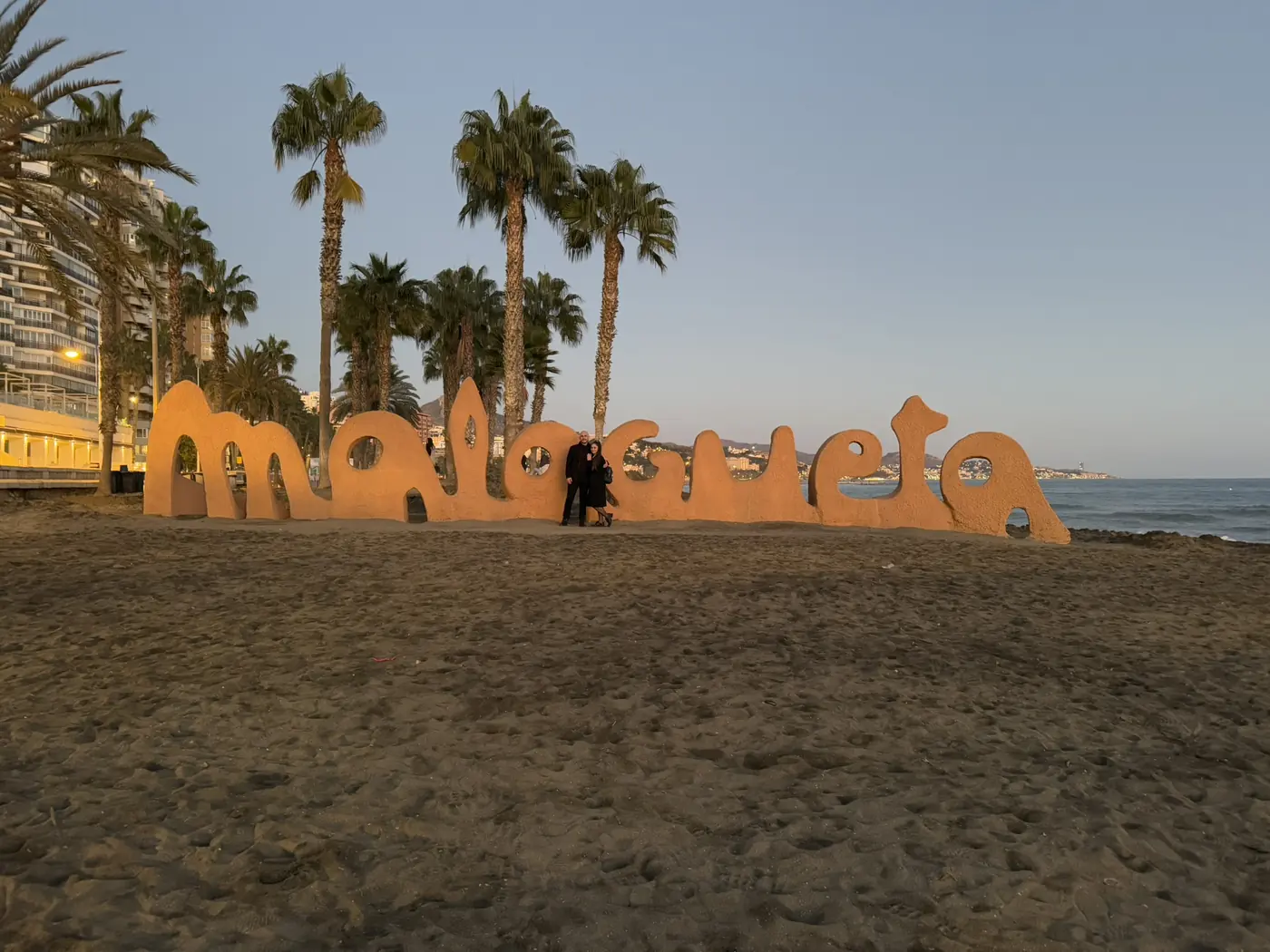
The Malagueta sign in rusted steel letters on the beach at Málaga at sunset, with palm trees behind.

La Malagueta & the Seafront: Best Time to Walk It

Málaga has a city beach that is genuinely usable, which separates it from every other Andalusian city on this site. La Malagueta starts a ten-minute walk from the cathedral, past the redeveloped port and the Muelle Uno promenade, and runs east under palm trees with the big rusted-steel letters at the western end.

In late December and early January it was warm enough to sit out at sunset in a coat — and warm enough that a few people were in the water. It's not a beach holiday, but it's the reason Málaga feels different from Seville or Granada in winter: the light stays, and the sea is right there.

Walk it west to east in the last hour of daylight, ending at the chiringuitos — beach restaurants that grill sardines on a skewer over a wood fire in a boat filled with sand. Espeto de sardinas is the thing to order, and it is done properly from about April.

Opening hoursAlways open. Chiringuitos generally from midday to late, with reduced winter hours.
PriceFree
Best timeThe last hour before sunset, walking east so the light is behind you and the city is lit.
AllowAn hour from the cathedral to the far end, with stops.
We wentFree entry
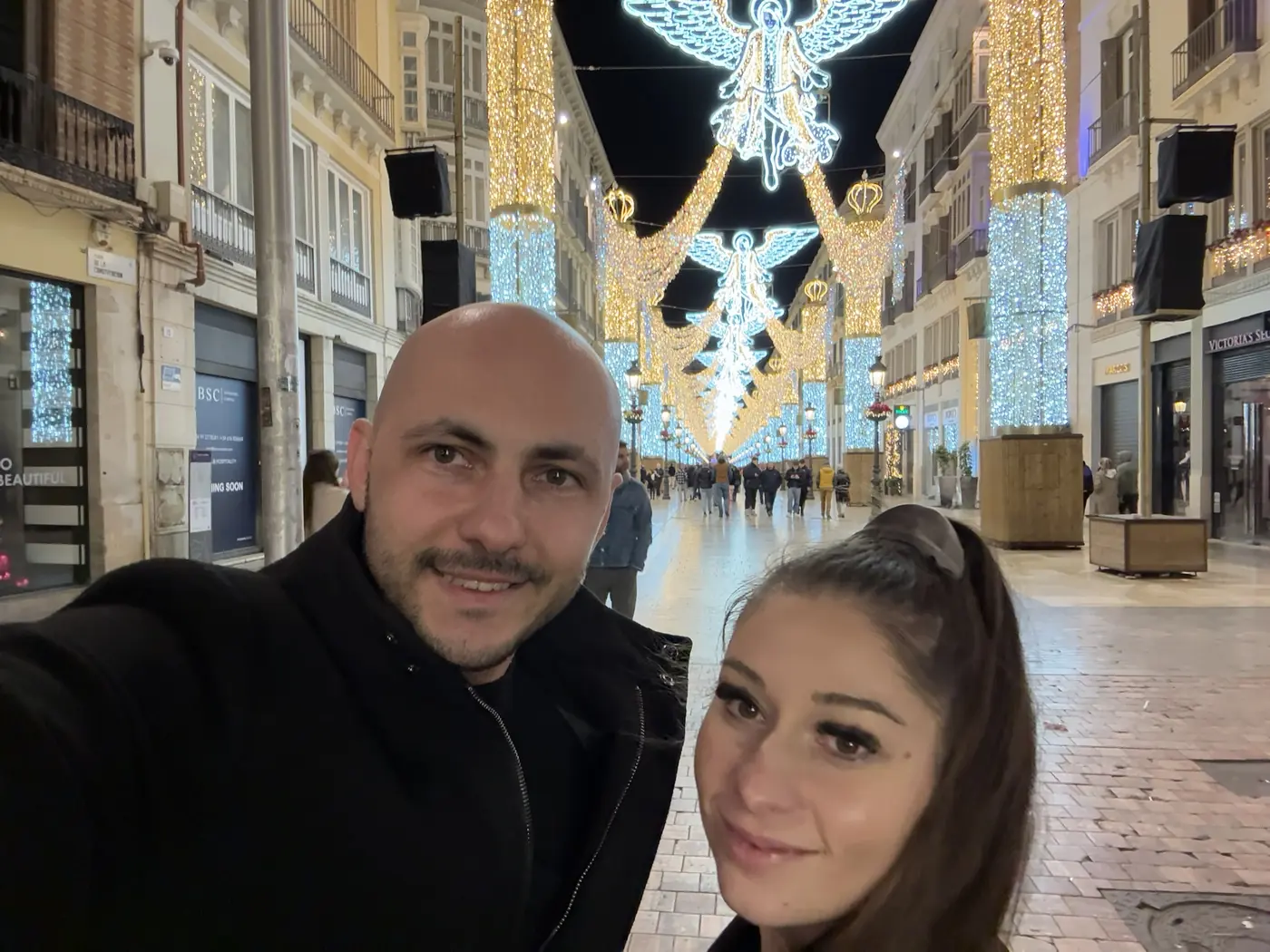
Calle Larios in Málaga under an arched canopy of blue and white Christmas lights at night.

Calle Larios After Dark: Málaga's Christmas Lights

The city's marble-paved main street, entirely pedestrian, running from Plaza de la Constitución down to the port. Ordinary enough by day. In December it becomes one of the most extravagant Christmas light displays in Europe: a full arched canopy the length of the street, with a music-and-light show several times an evening that stops traffic — figuratively, since there isn't any.

The lights typically go up in late November and stay until early January, and the shows run from around 18:30. It is free, it is genuinely spectacular, and it is the reason to consider Málaga as a December destination rather than a summer one.

Opening hoursAlways open. Christmas lighting late November to early January, shows from about 18:30.
PriceFree
Best timeBetween 18:30 and 20:00 in December, before the dinner crowd. Stand at the Plaza de la Constitución end and look down the street.
Allow30 minutes, or an evening if you eat around it.
We wentFree entry

Real numbers

What Málaga costs

Ticket2026 priceNote
Alcazaba + Gibralfaro combined€10.00Valid 48 hours · free Sundays from 14:00
Alcazaba alone€7.00
Gibralfaro alone€7.00
Málaga Cathedral€10.00Free daily 08:30–09:00 · rooftop closed
Museo Picasso Málaga€12.00Permanent collection
Casa Natal de Picasso€3.00
Mercado de Atarazanas · Malagueta · Calle Larios€0.00
Fortresses + cathedral + Picasso museum€32.00€22 if you go on a Sunday afternoon

Málaga is the cheapest city on this trip to sightsee in, and the only one where the two headline monuments are free once a week without booking.

Real receipts

Where to Stay in Málaga: Areas, Prices & Where We Stayed

We used Málaga as a base for four nights and drove out of it on two of them, which made one feature matter more than location: parking.

If you're hiring a car, book a place with parking. This is the one accommodation decision in Andalusia that has a real cost attached. Málaga's centre is restricted and public car parks run roughly €20–25 a night — across four nights that's €80–100, which is most of a night's accommodation. Filtering for "parking included" and accepting a 15-minute walk saved us more than the walk cost us.

The areas, and who each suits

AreaWhat it's likeSuitsTypical / night
Centro HistóricoCathedral, Calle Larios, the market. Lively from morning to very late — street-facing rooms are loud.First-timers with no car€120–250
SohoBetween the Alameda and the port. Street art, galleries, a younger crowd. Five to ten minutes from the old town and the beach.Food and nightlife€100–200
La MalaguetaThe city beach, 10–15 minutes from the centre. Often better value than Centro in summer.Anyone who wants the sea from the door€110–220
El Perchel / La TrinidadTraditional, working-class, west of the river. Less polished, far less visited, cheapest of the central options — and where the parking is.Drivers, budget stays, longer trips€80–150
PedregalejoA former fishing village 20–30 minutes east, famous for grilled sardines.Slow trips, not sightseeing bases€90–180

Ranges are for a double room or small apartment. New Year's Eve and Semana Santa both push these up sharply — ours was a New Year booking, which is why €129.75 a night in an unglamorous neighbourhood was a fair price rather than a bad one.

Basing yourself in Málaga If you're driving any of the day trips on this page, filter for parking first and location second.

Quick answers

Málaga FAQ

How many days do you need in Málaga?

Two days covers the city itself — the Alcazaba, Gibralfaro, cathedral, market, a Picasso site and the seafront. Three or more makes sense if you're using it as a base for Caminito del Rey, Ronda and Gibraltar, which is what we did — Córdoba works as a day trip by train too.

When are the Alcazaba and Gibralfaro free?

Every Sunday from 14:00, both monuments, no booking required. Otherwise the combined ticket is €10 and is valid for 48 hours, so you can do one on each of two days.

Should you walk or take the bus up to Gibralfaro?

Walk. The footpath climbs beside the Alcazaba's outer wall from near the Roman theatre and takes 15–20 minutes, with viewpoints the whole way — it's one of the best free things in the city. Bus 35 exists if you need it.

What is New Year's Eve like in Málaga?

Free, outdoors and very good. The countdown is in Plaza de la Constitución with a stage and a concert that runs past 01:00. Buy twelve seedless grapes in advance — one per chime at midnight — and note that 1 January closes almost everything until the afternoon.

Is Málaga Cathedral's rooftop open?

No — it's closed for restoration with no confirmed reopening date. The rooftop is normally included in the higher-priced ticket, so buy the standard €10 entry instead until it's back.

Is Málaga worth visiting, or just an airport?

Worth visiting. It was treated as an airport for years and has spent the last decade becoming one of the better city breaks in Spain — two Moorish fortresses, a real market, more than thirty museums, a usable city beach and the best-connected base in Andalusia.

From our own notes

Where we ate in Málaga

These are the four places that made it into our trip spreadsheet at the time, with what we went for.

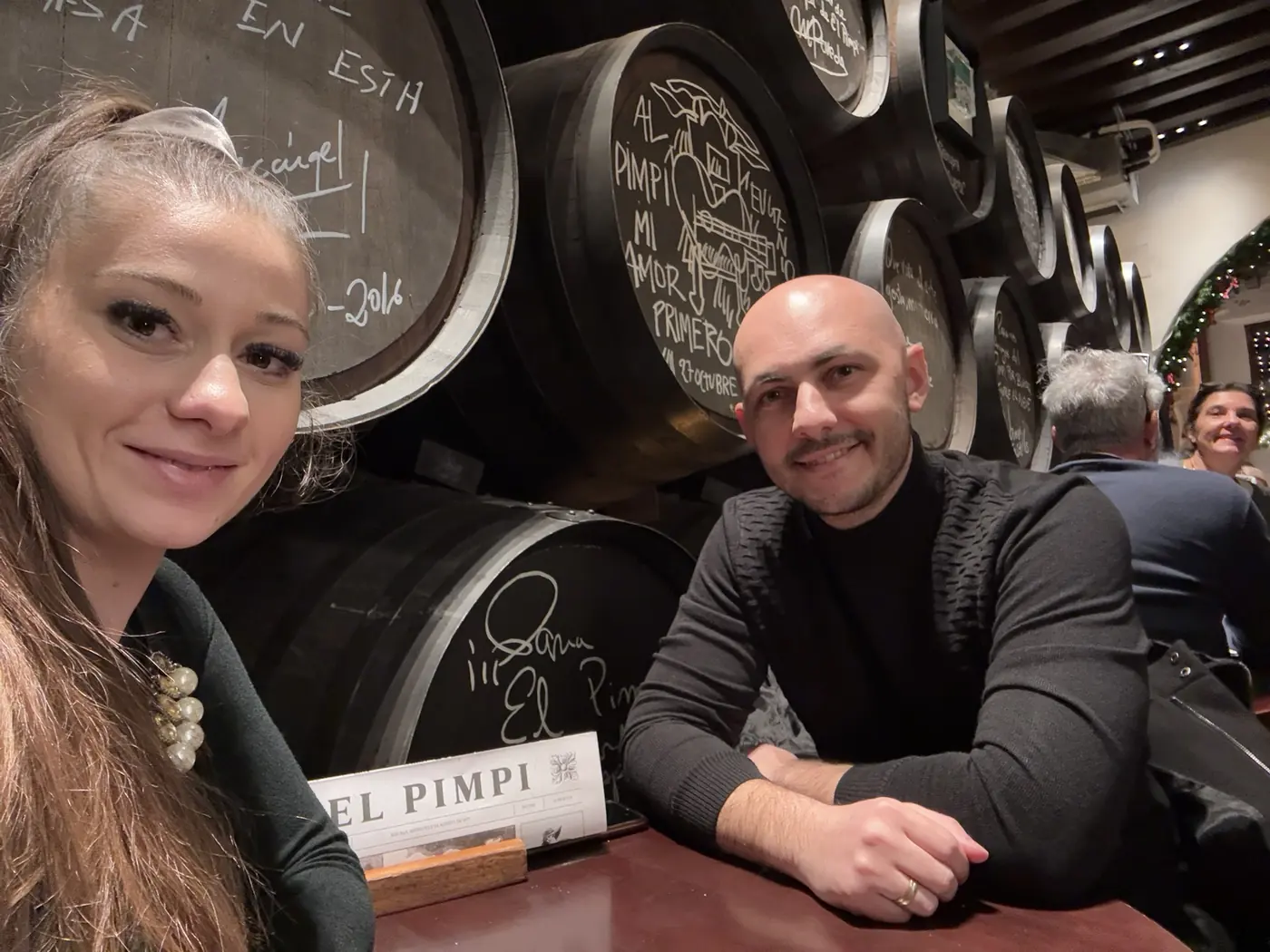
Wine barrels signed by visitors inside Bodega El Pimpi in Málaga.
The signed barrels at El Pimpi. 20:59
PlaceWhat it isNotes
Bodega El PimpiBodega bar · tapas, paellaThe famous one, in an 18th-century house near the Roman theatre. Sherry barrels signed by everyone from Antonio Banderas down. Touristy and still good — go for a drink and a plate rather than a full dinner.
Casa LolaTapas, paellaSmall, tiled, standing room, quick. Several branches in the centre.
El TinteroSeafront fish restaurantOut east past the Malagueta, worth the taxi. No menu — waiters walk the room shouting what's on the plates and you take what you want as it passes. Fixed price per dish. One of the genuinely unusual meals in Spain.
Casa ArandaChurrosSince 1932, in an alley off Calle Larios. Churros and thick chocolate, and it's full of Malagueños at breakfast rather than visitors.

Málaga eats late even by Spanish standards. Kitchens get going around 21:00 and El Tintero in particular is a long, loud dinner rather than a quick one.

Why we based here

Day trips from Málaga

You'll want a car for two of these. Caminito del Rey, Ronda, Setenil, Colomares and Gibraltar are all much easier driving; Córdoba, Granada and Seville are all better by train. We picked the car up in Málaga rather than at the start of the trip, which was the right call — you don't want a car in Seville.

Need a car for those day trips? You can find an affordable rental in Málaga through Localrent (affiliate link).

A little more adventure in your inbox.

The newsletter is being set up. Until it opens, write to us and we'll add you to the first send — and we'll answer any question about a trip while we're at it.

Email us

No spam, one click to unsubscribe once it starts. We never share your address — see the privacy policy.